

Why Quick Action After a Flood Can Save Your Home
Flooded home restoration is the process of safely removing water, drying structural components, cleaning contaminated surfaces, and repairing damage to return your property to a safe, livable condition. The key to successful restoration is acting within the first 24-48 hours to prevent mold growth, structural damage, and escalating costs.
Essential Steps for Flooded Home Restoration:
- Ensure Safety First – Turn off electricity and gas, check for structural hazards, and wear protective equipment before entering
- Document Everything – Take photos and videos of all damage before cleanup begins for insurance claims
- Remove Standing Water – Extract water immediately using pumps or wet vacuums to prevent further absorption
- Begin Drying Within 24-48 Hours – Use fans, dehumidifiers, and open ventilation to prevent mold growth
- Clean and Disinfect – Remove contaminated materials and sanitize all affected surfaces with EPA-approved disinfectants
- Contact Your Insurance Company – File your claim promptly and keep detailed records of all restoration activities
Flooding costs the United States hundreds of billions of dollars every year, making it the most common natural disaster affecting homeowners across the country. When floodwater enters your home—whether from a hurricane, storm surge, burst pipe, or heavy rainfall—the clock starts ticking immediately. Research shows that mold can begin growing in damp places within just 24 hours, and within two days you can have visible colonies if conditions are warm.
The damage goes far beyond wet carpets and soggy drywall. Floodwater often carries dangerous contaminants like sewage, bacteria, viruses, and chemicals that pose serious health risks to you and your family. If water isn’t drained and dried within that critical 24-48 hour window, you’re facing not just cosmetic issues but potential structural damage, compromised air quality, and costly long-term problems that could have been prevented.
I’m Nino Espinoza, owner of CAT 3 Recovery, and I’ve spent over 20 years leading flooded home restoration projects throughout Southwest Florida, including hurricane response and major storm events. My team and I have seen what happens when homeowners act quickly versus when they wait—and the difference can mean thousands of dollars and months of additional work.

First 48 Hours: Immediate Steps for Safety and Damage Mitigation
When floodwaters recede, the urge to jump right into cleaning can be overwhelming. But trust us, the most critical step is to prioritize safety. Floodwater is unpredictable and often carries hidden dangers. Our first call to action is always to ensure the well-being of everyone involved.
Assessing and Securing Your Property
Before you even think about stepping into your flooded home, take a deep breath and assess the situation from a safe distance. Is there visible structural damage? Are power lines down? These initial observations can save lives.
Our first and foremost advice is always safety. Before entering a flooded home, you must be certain it’s structurally sound. Look for cracked foundations, shifting walls, or compromised roofs. If you have any doubts, wait for professional assessment.
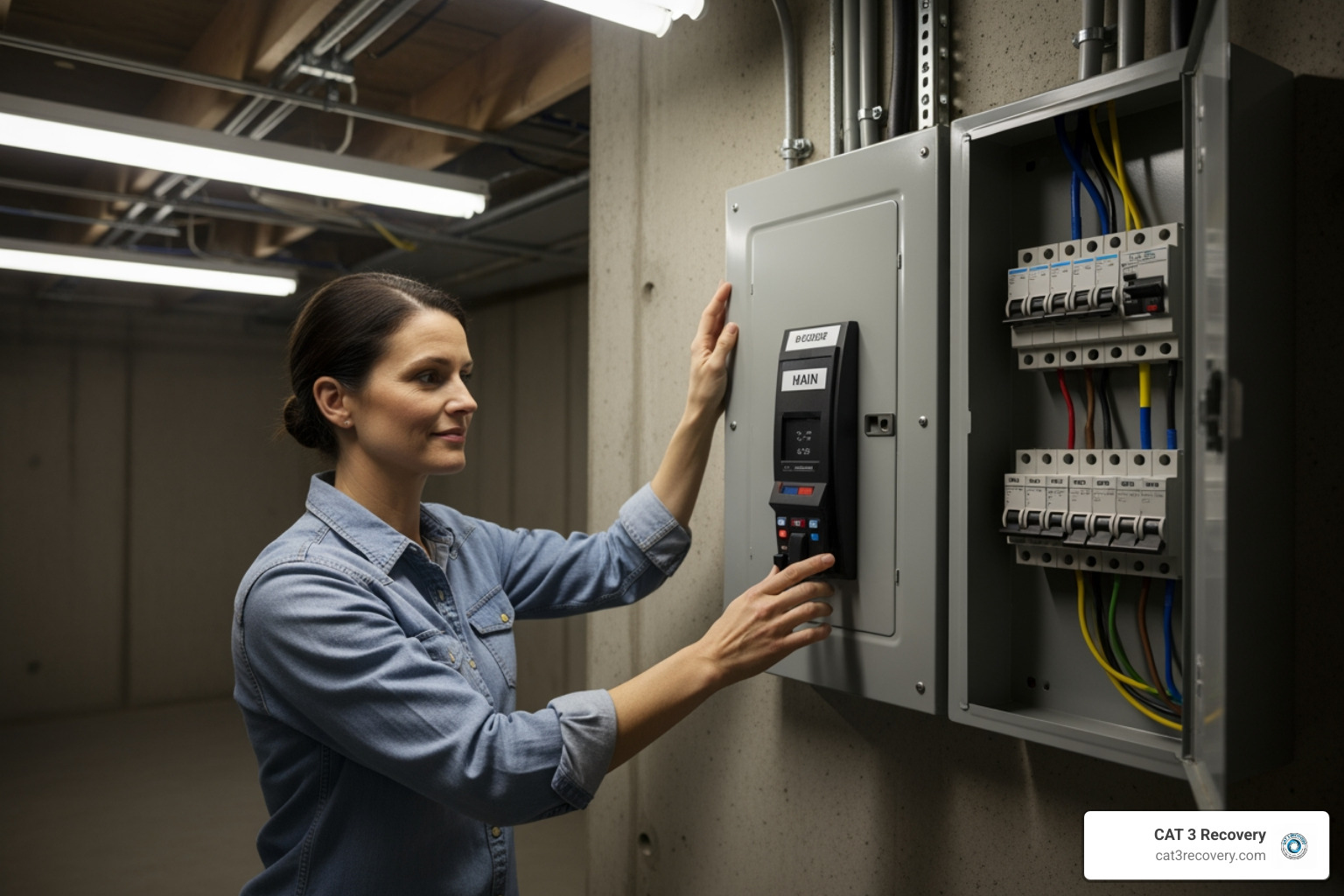
Next, and this is crucial, turn off your home’s electricity and gas supply. Floodwater and electricity are a deadly combination. If you can’t safely access your main circuit breaker or gas valve, contact your utility company immediately. Assume all electrical systems are unsafe until a licensed electrician can inspect them.
Once the immediate dangers are addressed, it’s time to document. We cannot stress this enough: take as many photos and videos as possible of all damaged areas before you touch anything. This visual evidence will be invaluable for your insurance claim. We’ve put together a comprehensive guide on How to Document Water Damage for Insurance: Photos, Readings, Logs to help you through this process. The more detailed your documentation, the smoother your claim process will be. The EPA and Floodsmart.gov also offer guidance on How to Document Flood Damage Insurance Claims.
If safe to do so, start moving undamaged items and valuables to higher, dry ground. This not only protects them from further damage but also clears paths for cleanup.
Initial Water Removal and Ventilation
With safety secured and documentation underway, the next immediate step is to remove standing water. The faster you get the water out, the less time it has to soak into building materials and furnishings, and the lower the risk of mold growth. For significant amounts of water, a submersible pump might be necessary. For smaller areas, a wet/dry vacuum is your best friend.
Once the bulk of the water is removed, ventilation becomes paramount. Open windows and doors to create airflow, especially if the weather permits (i.e., low humidity outside). If you have power, turn on your air conditioner, a dehumidifier, and/or every fan you own. Keep windows closed if using a dehumidifier and AC to help air circulate inside and remove moisture. If only using fans, keep windows open and face exhaust toward an open window. This constant air movement helps accelerate the drying process.
However, if you’re without power and relying on a portable generator, exercise extreme caution. Generators emit deadly carbon monoxide, so never run one indoors. Place the generator at least 20 feet from your home with the exhaust facing away from the house. Use a heavy-gauge extension cord (around 12-gauge) if it’s not connected to a transfer switch. Your safety and the safety of your family always come first.
While shop vacs and fans are helpful for initial water removal and air circulation, they are rarely sufficient for proper structural drying after a major flood. As we explain in our article Why Shop Vacs and Fans Don’t Properly Dry Water Damage, specialized equipment and techniques are needed to extract moisture from deeply saturated materials and prevent hidden mold.
The Restoration Roadmap: Cleaning, Drying, and Repairing Your Home
Once the initial emergency is handled, the real work of flooded home restoration begins. This phase is a meticulous, multi-step process that requires patience and precision. Our goal at CAT 3 Recovery is to not just clean up, but to restore your home to its pre-loss condition, ensuring it’s safe, healthy, and structurally sound.
Floodwater is often categorized based on its contamination level. Category 1 is clean water, like a burst pipe. Category 2 is grey water, which might contain contaminants but isn’t immediately life-threatening. Category 3 is black water, which includes sewage, river flooding, or seawater, and is highly contaminated and dangerous. In Southwest Florida, we often deal with Category 3 water from storm surges and heavy rainfall, which requires specialized handling and decontamination protocols.
Essential Cleaning for Flooded Home Restoration
Cleaning after a flood is far more involved than a typical spring cleaning. You’re not just removing dirt; you’re eliminating potential health hazards.
First, remove all debris, mud, and silt. This can be a labor-intensive process, but it’s crucial for effective cleaning. Next, focus on cleaning surfaces. Use a solution of clean water and detergent to thoroughly wash down all hard, non-porous surfaces. This includes walls, floors, and furniture that can be salvaged.
After cleaning, disinfection is key, especially with contaminated floodwater. You can use an EPA-registered disinfectant or sanitizer on clean surfaces that do not absorb water to kill microorganisms such as viruses, bacteria, and mold. Always read and follow the product labels carefully, and never mix cleaning products, especially bleach with ammonia, as this can create toxic fumes. Disinfectants work best on surfaces that are already clean.
Unfortunately, some materials cannot be salvaged and must be disposed of. This typically includes porous items like carpets, upholstered furniture, mattresses, and insulation that have been soaked by floodwater, particularly if it was contaminated. For situations involving sewage, specialized procedures for Sewage Backup Cleanup are absolutely essential to protect your health.
Restoring Key Areas of Your Home
Different parts of your home require specific restoration steps. Here’s a general overview:
| Area | Restoration Steps |
|---|---|
| Drywall | If exposed to floodwater, even minimal amounts, it must be removed. Floodwater is considered highly contaminated. Mold starts growing within 24-48 hours. Remove at least 1 foot above the waterline, and any soaked insulation behind it. |
| Hardwood Floors | Hardwood floors are generally porous and can warp, cup, or buckle when exposed to floodwater. If saturated, they usually need to be removed. The subfloor underneath must be thoroughly dried and inspected for mold. |
| Carpet | Carpets and their padding are highly absorbent and will almost always need to be removed and discarded after flood damage due to contamination and mold risk. The subfloor must then be cleaned, disinfected, and thoroughly dried. |
When floodwater infiltrates your home, it often saturates materials like drywall and insulation. Saturated batt insulation, for example, leads to poor air quality, mold, mildew, and can even cause your home’s structure to rot. We follow the best practices, which include removing drywall at least one foot above the waterline and any soaked insulation behind it. This opens up the wall cavity, allowing the studs to dry out completely.
For flooring, we understand the heartbreak of seeing beautiful hardwood or carpet submerged. Unfortunately, water-damaged carpet and under-pads are prime breeding grounds for mold and often cannot be salvaged. Even tile, which doesn’t absorb water, can have its wood substrate dampen and lead to mold if water seeps underneath. Our process often involves Flooring Removal to ensure proper drying of the subfloor and prevent hidden mold.
Don’t forget your HVAC system! If any part of your heating, ventilation, and air conditioning system was affected by floodwater, it must be professionally inspected and cleaned. Running a contaminated HVAC system can spread mold spores and other pollutants throughout your entire home, compromising your indoor air quality. This is particularly important with Air Conditioner Water Damage.
The Science of Drying: Preventing Mold and Structural Issues
The most critical window for preventing extensive mold growth is the first 24-48 hours. As we mentioned, mold starts growing in damp places within 24 hours, and visible colonies can appear within two days if it’s warm. This is why rapid, thorough drying is non-negotiable in flooded home restoration.
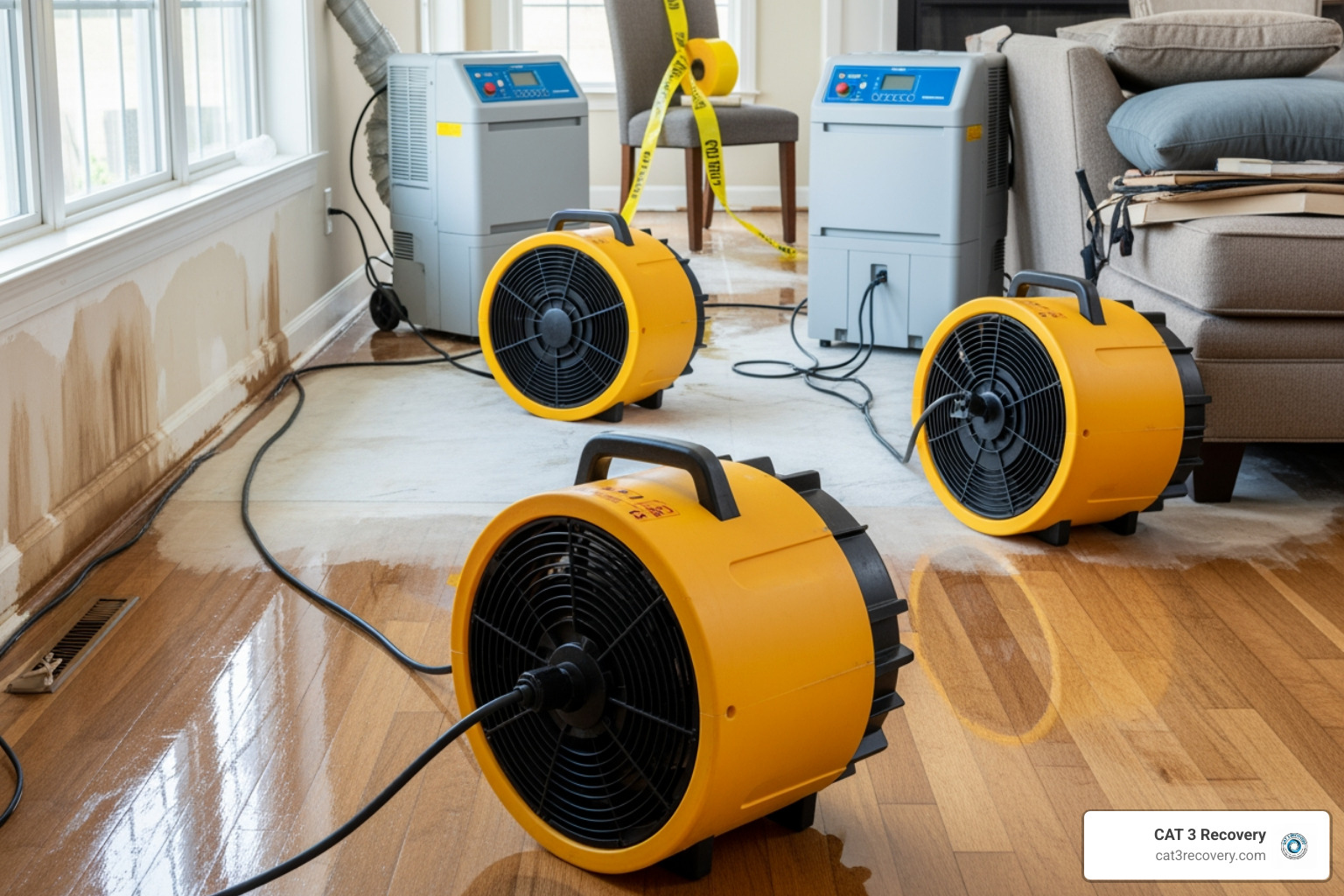
We don’t just “dry things out” with a few fans. We employ a scientific approach to drying, known as psychrometrics, which precisely controls temperature and humidity to optimize moisture removal. This involves strategic placement of commercial-grade dehumidifiers and air movers. Dehumidifiers pull moisture from the air, while air movers create high-velocity airflow across wet surfaces, accelerating evaporation.
To truly know when your home is dry, you need more than a visual inspection. We use specialized tools like moisture meters and thermal cameras. Our article What Moisture Meters, Thermal Cameras Reveal After a Flood explains how these tools help us detect hidden moisture within walls, floors, and other structural components, ensuring no damp spots are left behind. Materials are considered dry enough for refinishing when their moisture content reads 15% or less.
Proper structural drying is an intricate process. It’s not just about removing surface water; it’s about drying out the very fabric of your home. If materials remain wet for more than two days, they usually get moldy, potentially making the air in your home unhealthy. This is why understanding How Long Wet Building Materials Can Stay Before Mold Growth Begins is vital, and why professional intervention is often necessary to achieve optimal drying conditions in a timely manner.
Navigating Insurance and Professional Flooded Home Restoration
Dealing with the aftermath of a flood is stressful enough without the added headache of insurance claims and finding reliable help. We understand this, which is why we’ve streamlined our processes to work seamlessly with your insurance provider, making your flooded home restoration as smooth as possible.
Understanding Your Insurance Coverage
One of the first calls you should make after a flood, once you’ve ensured safety and documented the damage, is to your insurance company. However, it’s crucial to understand a key distinction: most standard homeowners’ insurance policies do not cover flood damage. This is a common misconception, and it often catches homeowners in Southwest Florida off guard.
Flood damage, typically defined as damage from external sources like overflowing rivers, storm surges, or heavy rainfall, requires a separate flood insurance policy. For many of us in Florida, this is a necessity, not a luxury. The National Flood Insurance Program (NFIP) is often the primary provider of this specialized coverage. If you’re unsure about your coverage, we highly recommend checking out flood insurance resources.
When filing your claim, promptness is key. Keep meticulous records of all communication, every photo you’ve taken, and any expenses incurred. This documentation is your “proof of loss” and will be essential for your adjuster. For those seeking additional assistance, resources like Disaster Financial Assistance from FEMA can provide valuable support.
Our team at CAT 3 Recovery is experienced in working with insurance companies. We understand What Adjusters Look For During a Water Damage Inspection and can help provide the detailed reports and evidence needed to support your claim. We also help homeowners steer the complexities of their policies, especially when distinguishing between Sudden vs Gradual Water Damage: Why Claims Get Denied.
Hiring a Professional for Flooded Home Restoration
While some minor water issues might be manageable with a DIY approach, a major flood event almost always necessitates professional help. When your property suffers from serious flood damage, it’s best to call in the experts. Floodwater can be dangerous, mingling with electricity and carrying waste that’s not always visible but harmful. It requires thorough drying, decontamination, and dehumidification to prevent further damage.
What should you look for in a professional restoration company?
- Certifications: Look for companies with IICRC (Institute of Inspection, Cleaning and Restoration Certification) certified technicians. This signifies they have undergone rigorous training and adhere to industry best practices for water damage restoration and mold remediation.
- Experience: Especially in Southwest Florida, experience with hurricane and storm-related flooding is invaluable. We’ve been doing this for over 20 years, understanding the unique challenges our local climate presents.
- References: Don’t hesitate to ask for references and check online reviews. A reputable company will be transparent about their track record.
- Licensing and Insurance: Ensure the company is fully licensed and insured to protect yourself from liability.
- Rapid Response: Time is of the essence in flood damage. A professional company should offer 24/7 emergency services and be able to respond quickly. Our USP at CAT 3 Recovery is rapid, expert-level emergency response.
- Comprehensive Services: From initial Water Damage Mitigation to full reconstruction, a good company can handle the entire scope of work, coordinating with other specialists like electricians and HVAC technicians.
The cost of flood damage typically ranges from $1,500-$6,500, depending on the extent of the damage and affected areas. A prompt response using professional systems can save 15-40% on water damage claim costs. Investing in professional flooded home restoration helps prevent more costly issues down the line.
Hidden Dangers: Health Hazards and Long-Term Consequences
Beyond the visible destruction, floodwaters leave behind a trail of invisible threats that can severely impact your health and the integrity of your home for years to come. Neglecting these hidden dangers during flooded home restoration can lead to devastating long-term consequences.
Health Hazards from Floodwater and Mold
Floodwater is rarely just water. In our experience across Southwest Florida, it often carries a dangerous cocktail of contaminants, including raw sewage, agricultural runoff, chemicals, bacteria (like E. coli and Salmonella), and viruses. Direct contact with or inhalation of aerosols from this contaminated water can lead to serious infections, gastrointestinal illness, and skin rashes.
The most pervasive health hazard after a flood, however, is mold. As we’ve discussed, mold can start growing within 24-48 hours in damp conditions. Flood water can make the air in your home unhealthy because when things remain wet for more than two days, they usually get moldy. Inhaling mold spores can trigger allergic reactions, asthma attacks, and other respiratory issues, especially in vulnerable populations like children, the elderly, and those with compromised immune systems. Mold can also cause skin irritation, headaches, and fatigue.
The EPA provides extensive Resources for Flood Cleanup and Indoor Air Quality | US EPA, emphasizing the importance of protecting yourself and your family during and after cleanup. We always recommend wearing appropriate personal protective equipment (PPE), including N-95 respirators, gloves, and eye protection, when dealing with flood-damaged areas.
Long-Term Consequences of Inadequate Restoration
Failing to properly address flood damage can lead to a cascade of problems that are far more expensive and difficult to fix than the initial cleanup:
- Structural Rot and Decay: Moisture trapped within wall cavities, subfloors, and structural beams will lead to wood rot. This compromises the structural integrity of your home, making it unsafe and requiring extensive, costly repairs down the line.
- Persistent Mold Growth: If moisture isn’t completely removed, mold will continue to spread, often hidden behind walls or under floors. This not only poses ongoing health risks but also produces musty odors and can damage more building materials. Our article Why Improper Structural Drying Causes Mold After Water Damage digs into this critical issue.
- Diminished Property Value: A history of unresolved flood damage or recurring mold issues can significantly decrease your home’s market value and make it difficult to sell. Buyers are increasingly wary of properties with a history of water intrusion.
- Compromised HVAC Systems: If not properly inspected and cleaned, flood-affected HVAC systems can become breeding grounds for mold and bacteria, continuously circulating contaminants throughout your home’s air.
- Electrical Hazards: Corroded wiring or damaged outlets from lingering moisture can create fire hazards or electrical shocks.
Cutting corners during flooded home restoration is a false economy. What might seem like savings upfront can quickly turn into astronomical repair bills and persistent health problems.
Frequently Asked Questions about Flood Damage Restoration
We often receive many questions from homeowners in Southwest Florida struggling with flood damage. Here are some of the most common ones:
How much does flood damage restoration typically cost?
The cost of flooded home restoration can vary widely, but typically ranges from $1,500 to $6,500 or more, depending on several factors. These include:
- Extent of Damage: A small leak affecting one room will be less costly than a foot of standing water throughout an entire floor.
- Water Category: As discussed, Category 3 (black water) contamination requires more extensive cleaning, disinfection, and material removal than Category 1 (clean water), driving up costs.
- Materials Affected: Porous materials like carpet, drywall, and insulation usually need to be replaced, while non-porous items might be cleaned and dried. Hardwood floors are often more expensive to restore or replace than tile.
- Location: While the research mentions national averages, local labor costs and material availability in areas like Bonita Springs, Naples, or Cape Coral can influence the final price.
- Professional vs. DIY: While DIY might seem cheaper, inadequate restoration can lead to mold and structural damage, resulting in much higher costs later.
A prompt response using expert techniques can often save 15-40% on water damage claim costs by preventing secondary damage.
How long does it take to dry a flooded house?
The drying timeline for a flooded house can range from several days to several weeks, and sometimes even months for deeply saturated structural components. This isn’t a quick process, and patience is key to ensuring thorough drying. Factors influencing the duration include:
- Amount of Water: More water means more moisture to extract and evaporate.
- Humidity Levels: Southwest Florida’s high humidity makes drying more challenging, requiring powerful dehumidification.
- Building Materials: Some materials, like concrete slabs (common in our region), take much longer to dry than wood or plaster. Our article Why Slab Leaks Are So Common in Southwest Florida highlights the challenges of moisture in concrete.
- Ventilation and Equipment: Proper air circulation and the use of commercial-grade dehumidifiers and air movers significantly accelerate the drying process.
- Hidden Moisture: Moisture can hide in wall cavities, under cabinets, and within insulation, requiring professional detection with moisture meters.
We use moisture meters to confirm when materials have reached their dry standard (typically 15% moisture content or less) before any rebuilding begins. Rushing this process almost guarantees future mold problems.
What is the difference between a minor leak and a major flood cleanup?
While both involve water, the difference between a minor leak and a major flood is significant in terms of scope, contamination, and the necessary response:
- Scope of Damage: A minor leak, perhaps from a Pipe Burst Cleanup or a Water Heater Burst, might affect a localized area, whereas a major flood (like House Flooding from a hurricane) can impact entire rooms or even the entire structure.
- Water Contamination Levels: A minor leak from a clean water source (Category 1) is less hazardous than floodwater, which is often Category 3 (black water) and highly contaminated with pathogens. Sewage backup cleanup, for instance, falls into this highly hazardous category.
- DIY vs. Professional: A small, clean water leak might be manageable for a homeowner with a wet/dry vacuum and fans. However, major flooding or any black water contamination always requires professional flooded home restoration due to the health risks and the complexity of thorough drying and disinfection.
- Equipment Needs: Minor leaks typically require basic drying equipment. Major floods necessitate industrial-strength dehumidifiers, air movers, and specialized cleaning and disinfecting agents to prevent widespread mold and structural damage.
- Structural Impact: A minor leak might only affect surface materials, but a major flood can saturate structural components, requiring extensive drying, removal, and rebuilding.
In Southwest Florida, where we frequently face hurricane season, understanding this distinction is crucial. What starts as a minor water intrusion can quickly escalate into a major flood event, demanding professional expertise to ensure a safe and complete recovery.
Conclusion
Navigating the aftermath of a flood can feel like an overwhelming odyssey, but with the right approach, your home can be fully restored. We’ve walked through the immediate steps for safety and damage mitigation, explored the meticulous roadmap of cleaning, drying, and repairing, and discussed the crucial role of insurance and professional expertise. We’ve also highlighted the hidden dangers of inadequate restoration, emphasizing that cutting corners now can lead to much larger problems later.
The keys to successful flooded home restoration are clear: Safety, Speed, and Thoroughness. Prioritize the well-being of your family, act swiftly to remove water and begin drying, and be meticulous in every step of the cleaning and restoration process.
While initial steps can be taken by homeowners, major flood events almost always require the specialized knowledge, equipment, and experience of professional restoration experts. Our team at CAT 3 Recovery is dedicated to providing rapid, expert-level emergency response and IICRC-certified methods to homeowners across Southwest Florida. We handle everything from the initial assessment and water removal to comprehensive structural drying and working with your insurance company, ensuring your property is restored efficiently and effectively.
For expert assistance with any storm-related disaster, see our complete guide to Storm Damage Repair. We’re here to help you get back on your feet.
