

Understanding the Fungi vs Mould Relationship
If you’re wondering about fungi vs mould, here’s the simple answer: all mold is a type of fungus, but not all fungi are mold. Fungi is a vast biological kingdom that includes molds, mushrooms, and yeasts. Mold is just one specific form that certain fungi take, growing in multicellular filaments called hyphae.
Quick Comparison:
| Fungi | Mould |
|---|---|
| An entire biological kingdom (like “animals” or “plants”) | A specific type of fungus |
| Includes mushrooms, yeasts, molds, mildew | Only the fuzzy, filamentous growth form |
| Can be single-celled or multicellular | Always multicellular (made of hyphae) |
| Found everywhere in nature | Thrives in damp, poorly ventilated areas |
| Many are beneficial (food, medicine) | Often problematic indoors (health risks, property damage) |
The confusion is common, but understanding the difference matters. While many fungi are essential in nature and industry—from making penicillin to brewing beer—the mold growing in your home after a water leak is a serious problem requiring immediate attention.
Mold reproduces by releasing microscopic spores. These spores are everywhere, but when they land on damp indoor surfaces, they can colonize building materials like wood, drywall, and carpet, leading to health risks. Common symptoms from mold exposure include eye and throat irritation, coughing, and worsening asthma. Some molds also produce toxic substances called mycotoxins that can cause more serious health problems.
The key to controlling indoor mold is controlling moisture. Excess moisture from leaks, flooding, or high humidity creates the perfect environment for mold growth, a constant concern for property owners in Southwest Florida’s humid climate.
I’m Nino Espinoza, owner of CAT 3 Recovery, and over my 20+ years in disaster restoration, I’ve handled countless cases where understanding fungi vs mould made the difference between a quick cleanup and a complex remediation project. My IICRC certifications in mold remediation and water damage restoration have taught me that proper identification and science-based treatment are essential to protecting both your property and your health.

What is the Fungal Kingdom? A World Beyond Plants and Bacteria
The fungal kingdom is a diverse group of organisms. Unlike plants, fungi don’t photosynthesize; unlike animals, they don’t ingest food. Instead, they are heterotrophic, absorbing nutrients from their environment by secreting enzymes to break down organic matter. This makes them nature’s primary decomposers.
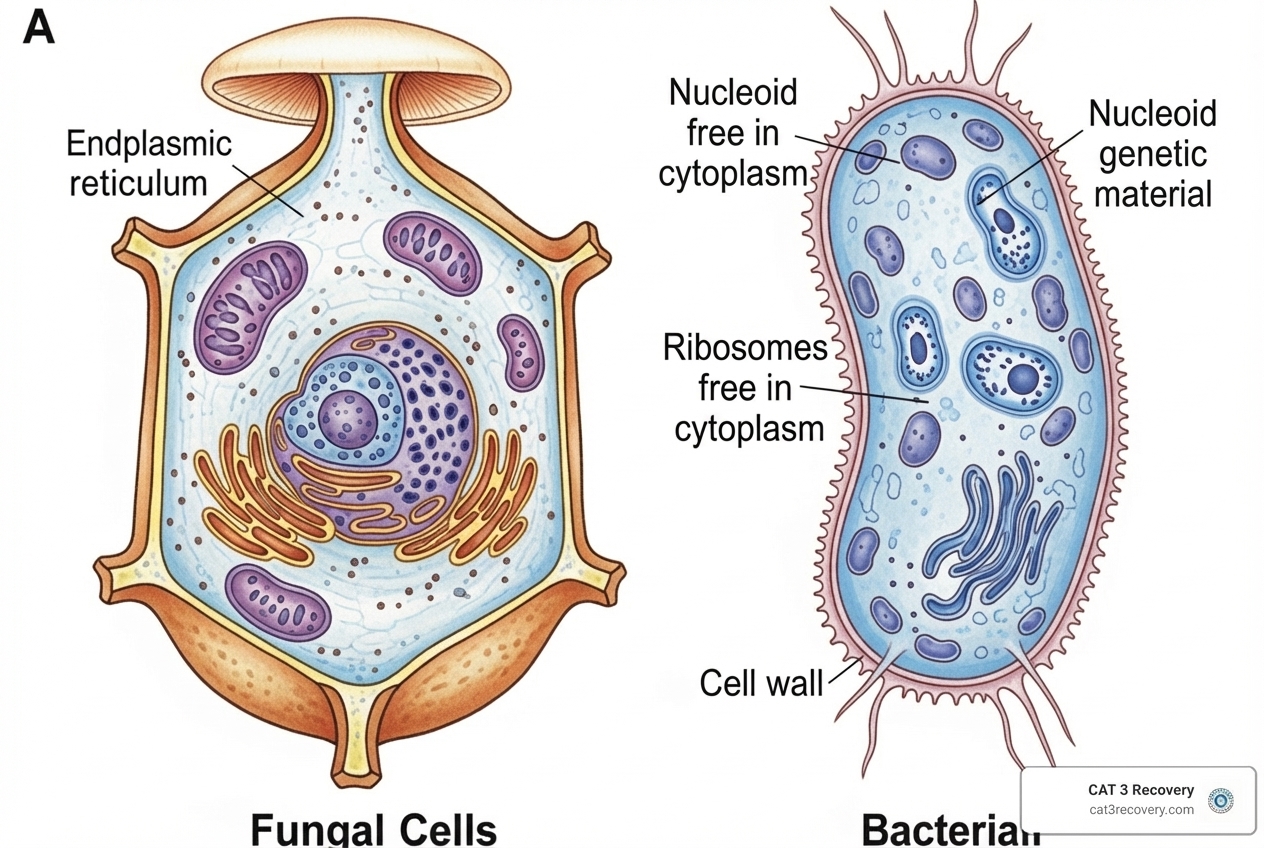
Biologically, fungi form their own kingdom. All fungi are eukaryotic, meaning their cells have a defined nucleus and organelles, much like human cells and more complex than bacteria.
Fungi vs. Bacteria: A Cellular Showdown
The difference between fungal and bacterial cells is significant. Fungal cells are complex and eukaryotic, with a membrane-bound nucleus and organelles. In contrast, bacterial cells are simpler prokaryotes, lacking a defined nucleus.
There’s also a notable size difference: a typical bacterium is about 1 micrometer (μm), while a yeast cell (a single-celled fungus) is around 5 μm. Molds and mushrooms can grow to macroscopic sizes, explaining their visible and destructive impact on homes after water damage. Without proper structural drying, conditions become ideal for fungal growth, creating problems far larger than any bacterial issue. You can learn more about the dangers of improper drying and its role in mold growth on our page about why improper structural drying causes mold after water damage.
The Major Players: Mold, Yeast, and Mushrooms
Within the fungal kingdom, these three are the most common forms:
-
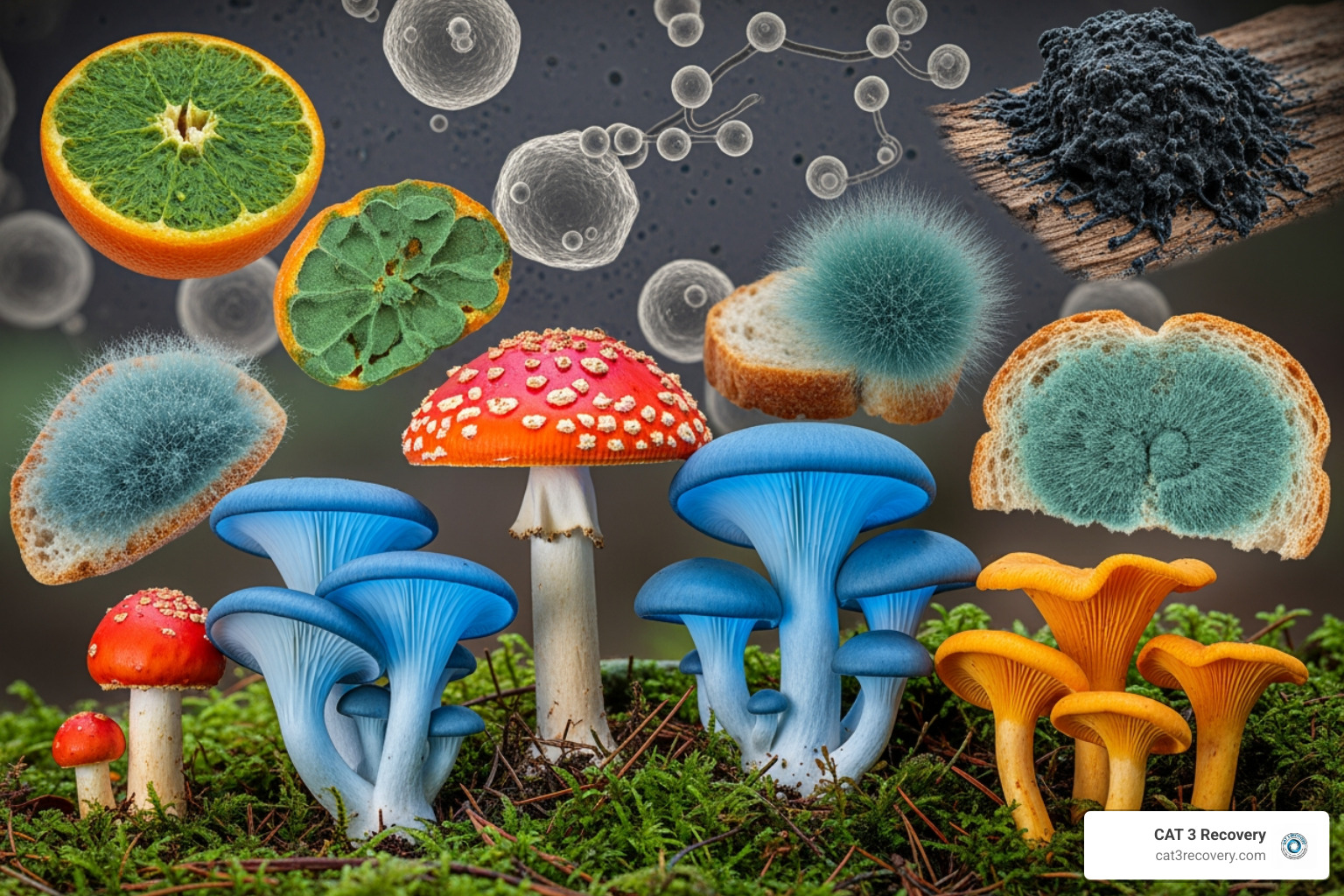
Mold: A multicellular fungus that grows in filamentous structures called hyphae. These intertwine to form a visible, fuzzy mass (mycelium). Common examples include Penicillium and Aspergillus.
-
Yeast: A single-celled fungus that reproduces by budding. Unlike mold, it doesn’t form hyphae. Saccharomyces cerevisiae (baker’s yeast) is a common example.
-
Mushrooms: The visible, macroscopic fruiting bodies of certain fungi. The main organism is a mycelial network underground, and the mushroom’s purpose is to disperse spores. The common button mushroom (Agaricus bisporus) is a familiar example.
Understanding these major players helps clarify how different fungi interact with our environment.
The Core Differences: Fungi vs Mould Explained
The core difference in the fungi vs mould debate is one of hierarchy: all mold is fungi, but the fungal kingdom also includes yeasts and mushrooms. Mold is a specific growth form characterized by multicellular filaments called hyphae. These filaments form a visible network (mycelium) that absorbs nutrients. Molds reproduce via microscopic spores that are always present in the air, waiting for moisture to germinate and grow.
Defining Characteristics: A Side-by-Side Look
To further clarify the relationship and differences in the fungi vs mould discussion, let’s look at their defining characteristics side-by-side:
| Characteristic | Fungi (as a Kingdom) | Mold (as a Type of Fungus) |
|---|---|---|
| Definition | A diverse kingdom of eukaryotic organisms that includes molds, yeasts, and mushrooms. | A specific type of fungus that grows in multicellular filaments (hyphae) and often appears fuzzy or slimy. |
| Scope | Broad classification, encompassing millions of species. | A subset within the fungal kingdom. |
| Structure | Can be unicellular (like yeast) or multicellular (like molds and mushrooms); includes hyphae, mycelium, and fruiting bodies. | Always multicellular, characterized by filamentous hyphae that form a mycelial network. |
| Reproduction | Reproduces via spores (asexual and sexual), budding (yeast), or fragmentation. | Primarily reproduces asexually through spores, which are released into the air. |
| Examples | Saccharomyces cerevisiae (yeast), Agaricus bisporus (button mushroom), Penicillium (mold), Rhizopus (bread mold). | Aspergillus, Penicillium, Stachybotrys, Cladosporium, Alternaria. |
| Role (Beneficial/Harmful) | Many beneficial roles (food, medicine, decomposition, symbiosis); some pathogenic. | Can be beneficial (e.g., in cheese production, antibiotics); often harmful in indoor environments due to health risks and property damage. |
The Critical Distinction in the Fungi vs Mould Debate
This distinction is critical for homeowners in Southwest Florida. Broadly, fungi are essential decomposers in nature. However, the focus shifts when mold grows indoors. Thriving in the damp, humid conditions common to our region, indoor mold degrades building materials, causing structural damage and musty odors.
More importantly, indoor mold poses health risks. Its spores can trigger allergies and respiratory issues like asthma. Some molds produce mycotoxins, toxic substances with more severe health effects. This is why indoor mold is a serious health and structural concern, not just a cosmetic issue. To dig deeper into the scientific differences, you might find our article on Mold vs Fungi: What Scientists Know That Most People Don’t insightful.
Health Impacts, Risks, and Roles in Nature
Fungi have diverse reproductive strategies. Asexual reproduction, common in mold, allows for rapid colonization of damp areas by producing vast numbers of microscopic spores. These ubiquitous spores are easily spread by air and water. Sexual reproduction creates genetic diversity, helping fungi adapt and survive long-term. The resilience and volume of mold spores mean that once they find moisture, a colony can establish quickly, making prevention the best defense.
Health Implications: When Fungi Become a Foe
While many fungi are harmless, some molds become a significant foe when growing indoors. Health impacts range from mild to severe.
For many, mold exposure causes allergic reactions like sneezing, coughing, congestion, and skin rashes. In Southwest Florida, this can significantly worsen existing allergies.
Mold is also a known trigger for respiratory problems, aggravating asthma. According to the National Institute of Environmental Health Sciences (NIEHS), mold can worsen asthma symptoms, especially for children, the elderly, and those with compromised immune systems.
A more serious concern is mycotoxins, toxic substances produced by some molds. Exposure can cause fatigue, headaches, and neurological issues. Some mycotoxins are even classified as human carcinogens. Because of these potential health impacts, any visible indoor mold should be treated seriously. If you’re unsure if it’s mold or dust, our guide on Is It Mold or Dust? Understanding the Difference can help.
The Good, The Bad, and The Fungi vs Mould in Your Home
The world of fungi is one of contrasts, offering both benefits and threats.
The Good: Many fungi are incredibly beneficial.
- Medicine: Penicillium mold gave us penicillin, the first antibiotic. Other fungi are used to create statins and immunosuppressants.
- Food and Beverages: Yeast is essential for making bread, beer, and wine. Molds are key to the flavor of cheeses like blue cheese and brie.
- Ecosystem Services: Fungi are vital decomposers, enriching soil and supporting ecosystems.
The Bad: The problematic side of fungi is often mold growth in our homes.
- Property Damage: Indoor mold feeds on materials like drywall and wood, causing structural damage and musty odors. This is a major concern in Southwest Florida’s humid climate.
- Health Risks: Indoor mold releases spores and mycotoxins that can cause a wide range of health problems. The presence of mold, especially “black mold” (Stachybotrys chartarum), is a serious issue requiring immediate action. Learn more about black mold removal.
Managing Mold: Prevention and Professional Remediation
Effective mold management is critical to prevent health risks and property damage. The golden rule is to control moisture, as fungi cannot grow without it. This is especially true in Southwest Florida’s high-humidity climate. The EPA recommends keeping indoor humidity between 30% and 50%. Sources of moisture include leaks, high humidity, and poor ventilation. Addressing water intrusion immediately is paramount, as the speed of response often determines the extent of the damage. Understanding how long wet building materials can stay before mold growth begins is key for any property owner.
Steps for Mold Prevention in Your Property
Proactive mold prevention protects your health and investment in Southwest Florida. Follow these tips:
- Control Indoor Humidity: Use air conditioners and dehumidifiers to keep humidity between 30% and 50%.
- Fix Leaks Promptly: Regularly inspect your plumbing, roof, and windows for leaks and repair them immediately.
- Ensure Proper Ventilation: Use exhaust fans in bathrooms and kitchens and air out your home on dry days.
- Insulate Cold Surfaces: Insulate pipes to prevent condensation.
- Clean Gutters and Downspouts: Ensure they direct water away from your foundation.
- Dry Wet Areas Within 24-48 Hours: Thoroughly clean and dry any spills or flooded areas quickly to prevent mold growth.
- Maintain HVAC Systems: Regularly clean and maintain your HVAC system to prevent spore circulation.
- Avoid Carpeting in Wet Areas: Do not use carpet in basements or bathrooms.
When to Call for Professional Mold Removal
While you can clean small mold patches on non-porous surfaces, professional remediation is essential in many cases. Call an expert if you encounter: Species-level identification comes from lab analysis, which is part of a full indoor air quality testing panel.
- Large-Scale Contamination: The EPA recommends professional help for mold covering more than 10 square feet. DIY cleaning can spread spores.
- Porous Materials: Mold on drywall, insulation, or carpet often requires professional removal and replacement.
- HVAC Systems: Suspected mold in your HVAC system requires immediate professional attention to prevent spores from circulating throughout your property.
- Health Concerns: If household members have persistent health issues or compromised immune systems, professional remediation is crucial for safety.
- Proper Containment: Professionals use containment barriers to stop spores from spreading during removal, a critical step often missed in DIY cleanups. Learn about our mold containment services.
- Hidden Mold: A musty odor suggests hidden growth. Professionals use specialized tools for mold inspection to find it.
At CAT 3 Recovery, we are IICRC-certified mold remediation specialists. We have the expertise, equipment, and protocols to safely and effectively remove mold from your property, from Fort Myers to Sarasota and everywhere in between. Our goal is to not only eliminate the visible mold but also address the underlying moisture source to prevent recurrence.
Frequently Asked Questions about Fungi and Mold
We often get questions from homeowners and property managers about the differences between fungi and mold, and what to do when they find it. Here are some of the most common inquiries we receive:
What is the primary distinction between mold and mushrooms?
Both are fungi, but they differ in structure. Mold is a microscopic fungus growing in simple filaments (hyphae) that form a fuzzy network. Mushrooms are the large, visible fruiting bodies of a larger underground fungus, created specifically for spore dispersal. In short, the mold on your wall is the whole organism, while a mushroom is just its reproductive part.
Why is yeast considered distinct from mold?
Yeast is distinct from mold due to its structure. Yeast is a single-celled (unicellular) fungus that reproduces by budding. Mold is a multicellular fungus that grows in thread-like filaments called hyphae. Their basic growth forms—unicellular vs. multicellular—are the key difference.
Can you clean mold yourself?
You can clean small mold patches (less than 10 sq. ft.) on non-porous surfaces like tile with detergent and water. However, professional remediation is essential for larger areas, porous materials (drywall, carpet), or suspected HVAC contamination. DIY cleaning of large infestations can spread spores and fail to address the moisture source. For a safe and effective solution, it’s best to get a professional assessment or mold testing service to determine the extent of the problem and the best course of action.
Your Partner in Creating a Safe, Mold-Free Environment
We’ve clarified the crucial distinction in the fungi vs mould debate: while the fungal kingdom is vast and includes beneficial organisms, mold is a specific type that, when found indoors, demands immediate attention.
The key takeaway is clear: all mold is a type of fungus, but not all fungi are mold. Indoor mold, fueled by moisture and warmth, can quickly become a significant problem, posing risks to both your property’s structural integrity and your family’s health. In the humid climate of Southwest Florida—from Bradenton to Port Charlotte, and across Collier, Hendry, Lee, and Manatee Counties—managing moisture is your strongest defense.
However, when mold growth is extensive, hidden, or affects porous materials or HVAC systems, it’s time to call in the experts. DIY solutions often fall short, risking further contamination and incomplete remediation. That’s where we come in.
At CAT 3 Recovery, we are your trusted partner in creating a safe, mold-free environment. With over 20 years of experience, our IICRC-certified specialists are equipped to handle any mold challenge in your residential or commercial property. We understand the unique environmental factors in Southwest Florida that contribute to mold growth, and we apply rapid, expert-level emergency response and science-based methods to ensure thorough and lasting results. We also handle the complexities of insurance claims, ensuring a smooth and stress-free restoration process for you.
Don’t let mold compromise your health or your property. If you suspect mold or have experienced water damage, act quickly. Contact us for professional Mold Remediation today. We serve all of Southwest Florida, including Bonita Springs, Cape Coral, Clewiston, Estero, Fort Myers, Labelle, Lehigh Acres, Marco Island, Naples, North Fort Myers, Punta Gorda, Sanibel Island, Sarasota, Tampa, and Venice. Let us bring our expertise to your door and restore peace of mind to your home or business.
