

Why Mold Damage Restoration Matters for Your Property and Health
Mold damage restoration is the professional process of identifying, containing, removing, and preventing mold growth in homes and buildings. It involves:
- Fixing the moisture source that caused the mold
- Containing the affected area to prevent spore spread
- Removing contaminated materials that can’t be salvaged
- Cleaning and disinfecting all affected surfaces
- Drying the structure completely to prevent recurrence
- Restoring damaged building materials to pre-loss condition
If you’ve finded mold in your home or business, you’re facing more than just an eyesore. Mold can begin growing in as little as 24 hours after water damage occurs, and it spreads rapidly—often to multiple areas of your property within 24 to 48 hours. Left untreated, mold causes serious health problems including allergic reactions, asthma attacks, and respiratory issues. It also damages your property’s structure and plummets its value.
The challenge is that mold isn’t always visible. It hides behind wallpaper, under carpets, inside walls, and within your HVAC system. By the time you notice that musty smell or see dark patches on your walls, the problem is often much larger than it appears.
Here’s the critical window: if you can dry wet materials within 24 to 48 hours after a leak or spill, mold usually won’t grow. Miss that window, and you’re looking at a full-scale remediation job that requires professional equipment, protective gear, and specialized training.
I’m Nino Espinoza, owner of CAT 3 Recovery, and I’ve spent over 20 years on the front lines of disaster restoration across Southwest Florida, including extensive work in professional mold damage restoration. My team and I follow strict IICRC standards to ensure every mold remediation project protects both your property and your health.
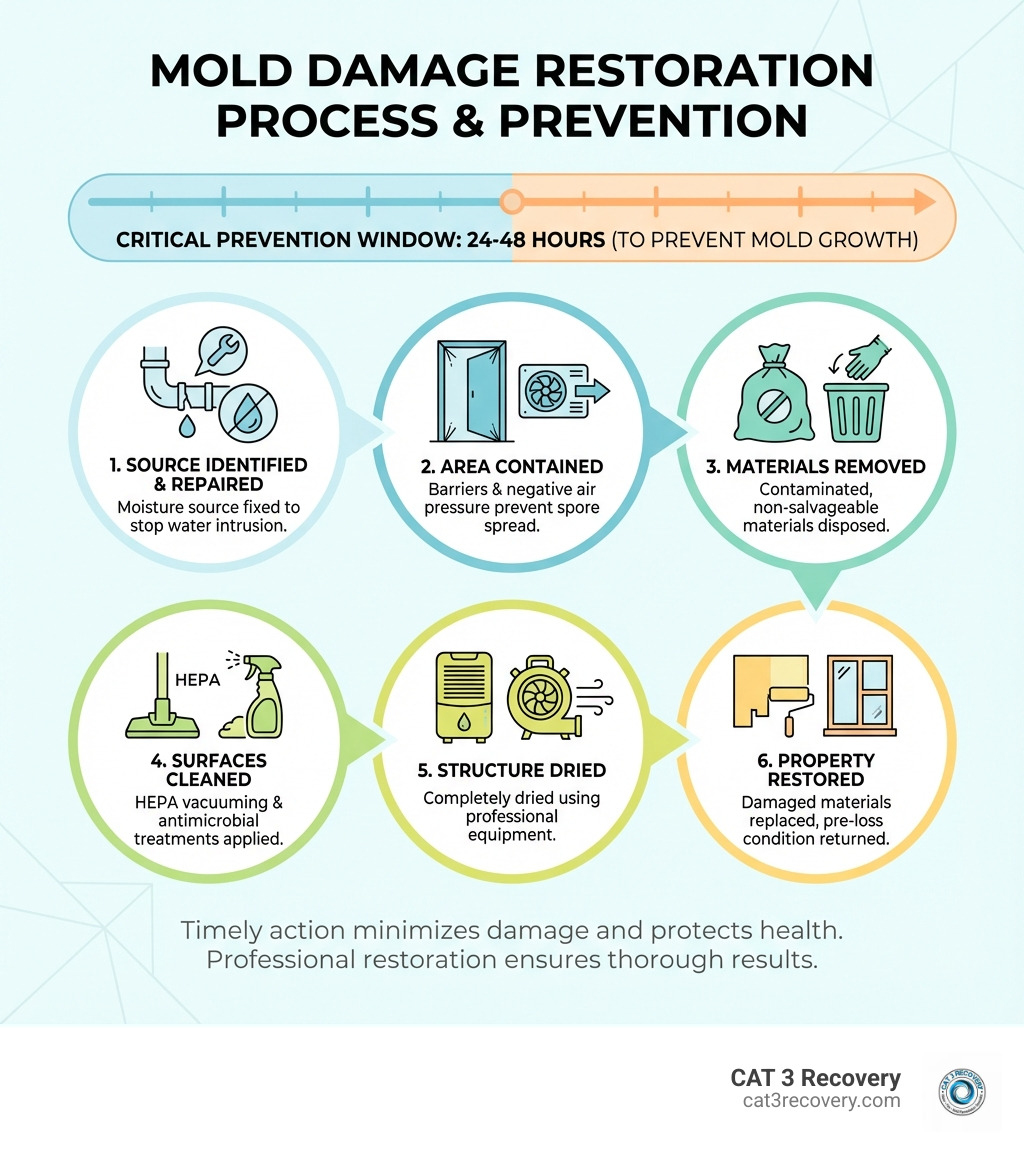 negative air pressure, 3) Contaminated materials removed and disposed, 4) Surfaces cleaned with HEPA vacuums and antimicrobial treatments, 5) Structure completely dried with dehumidifiers and air movers, 6) Damaged materials replaced and property restored, with timeline showing 24-48 hour critical window for prevention – mold damage restoration infographic “/>
Understanding Mold: The Unwanted Guest in Your Home
Mold is a fascinating, yet unwelcome, member of the fungi kingdom. It plays a vital role outdoors, breaking down organic matter and returning nutrients to the soil. However, when mold sets up shop inside our homes in places like Bonita Springs, Cape Coral, or Port Charlotte, it transforms from a natural decomposer into a destructive force.
All mold needs to thrive is a moisture source, a food source (which is virtually any organic material in your home, from drywall to wood), and a suitable temperature. Given these conditions, mold spores—microscopic organisms that float invisibly in the air around us—can germinate and begin to grow in as little as 24 hours. Once established, it can rapidly spread throughout your property in just 24-48 hours, turning a small patch into a widespread infestation.
Beyond the unsightly appearance, mold causes significant problems. It can degrade building materials over time, eating away at paper, drywall, wood, carpeting, and even insulation. This structural damage can compromise the integrity of your home, leading to costly repairs and a decline in property value. Our goal in mold damage restoration is not just to clean up the visible mess, but to address the root cause and restore your home to a safe, healthy state.
The Health Risks of Mold Exposure
While some molds are harmless, others can cause a range of health issues for you and your family. The Centers for Disease Control and Prevention (CDC) states that some molds may cause long-term and short-term health problems. When mold grows indoors, it releases spores, and sometimes mycotoxins, into the air. Inhaling or touching these can trigger various reactions, especially for sensitive individuals.
Common symptoms of mold exposure include:
- Allergic reactions, such as sneezing, runny nose, and nasal congestion
- Itchy, watery eyes
- Skin irritation or rashes
- Asthma attacks in individuals with asthma
- Respiratory issues like coughing, wheezing, and difficulty breathing
- Fatigue, dizziness, nausea, and headaches with long-term exposure
Infants, children, the elderly, and those with compromised immune systems are particularly vulnerable to more severe reactions. It’s not just about “black mold” either; all mold is potentially dangerous to humans and pets if left unaddressed. For more specific information on a particularly concerning type, you can learn about Black Mold Removal.
Common Causes of Mold in a Home
Mold doesn’t just appear out of nowhere; it’s always a symptom of a moisture problem. In our humid Southwest Florida climate, homes are especially susceptible. Here are the usual suspects we encounter:
- Water Damage: This is the biggest culprit. Anything from a burst pipe, an overflowing sink, or a leaky water heater can introduce enough moisture for mold to flourish. For instance, Why Improper Structural Drying Causes Mold After Water Damage explains how even after a water event, if materials aren’t dried thoroughly and quickly, mold is inevitable.
- Leaky Pipes and Roof Leaks: Small, persistent leaks often go unnoticed, slowly saturating building materials behind walls or in attics, creating ideal hidden breeding grounds for mold.
- High Humidity: Our tropical climate in Florida means high ambient humidity. If your home’s indoor humidity isn’t controlled (ideally between 30-50% relative humidity, and definitely below 60%), surfaces can become damp enough to support mold growth.
- Condensation: Cold surfaces, like uninsulated pipes or single-pane windows, can collect condensation, providing the necessary moisture for mold. Rust on a drainpipe, for example, is a clear indicator of condensation.
- Poor Ventilation: Areas like bathrooms, kitchens, and laundry rooms produce a lot of moisture. Without proper ventilation, this moisture gets trapped, leading to mold on walls, ceilings, and other surfaces.
- Flooding: Whether from a natural disaster or a plumbing failure, floodwaters saturate everything, and if not dried out within 24-48 hours, mold is guaranteed.
Addressing these moisture issues is the first and most crucial step in preventing and remediating mold.
Identifying a Mold Problem: Signs, Symptoms, and First Steps
Sometimes mold is painfully obvious—a fuzzy green patch on your shower wall. Other times, it’s a cunning hidden adversary. Knowing what to look for can help you catch a mold problem before it escalates.
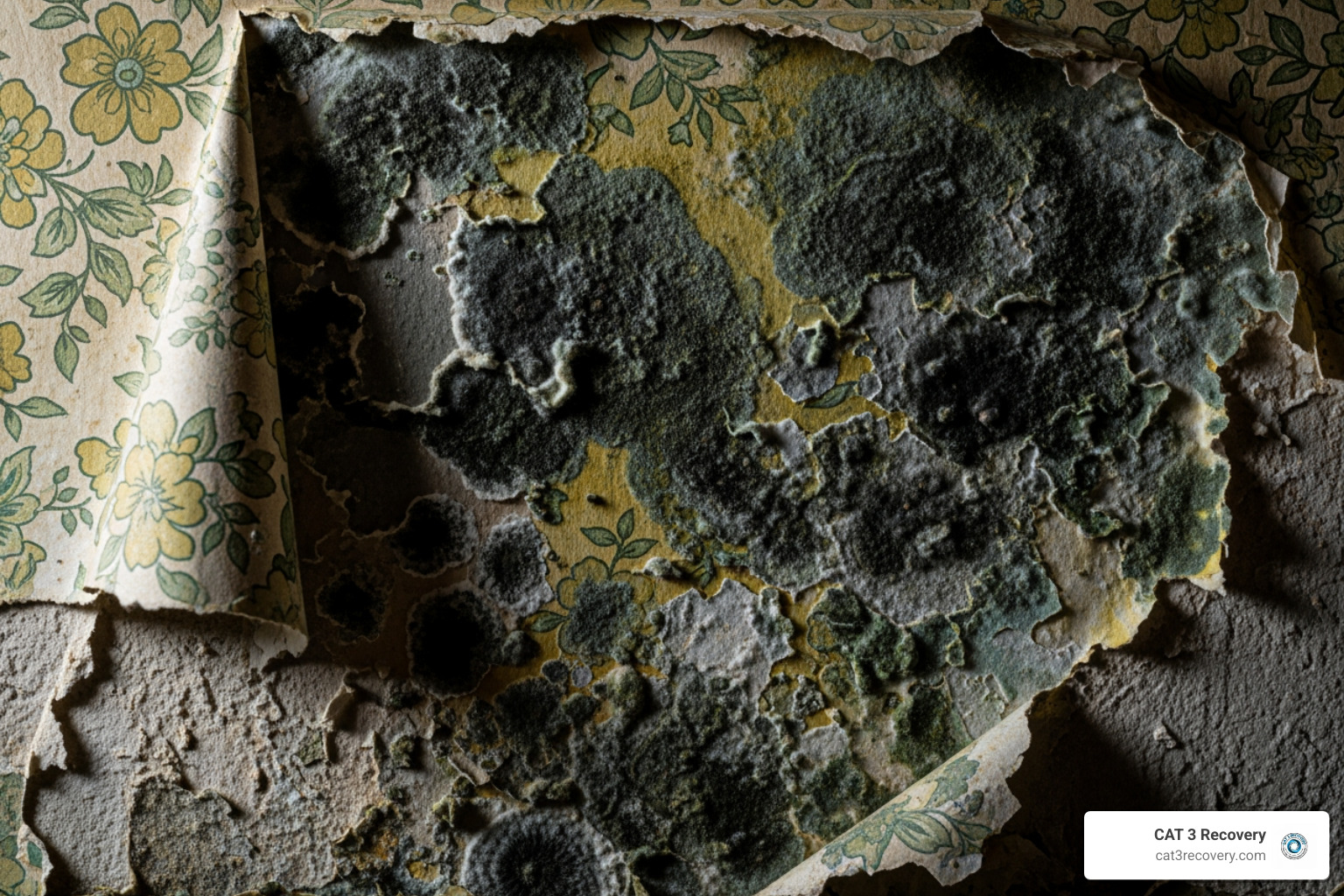
Here are the key indicators we advise homeowners to watch out for:
- Musty Odors: This is often the first sign of hidden mold. If you detect a strong, earthy, or stale smell, even if you can’t see anything, there’s likely mold growing nearby.
- Visible Growth: Mold can appear in various colors—green, black, white, gray, or even orange. It often has a fuzzy, slimy, or powdery texture. Look for blotches on walls, ceilings, floors, or around windows.
- Discoloration and Stains: Persistent dark spots or unusual staining on walls, ceilings, or fabrics can indicate mold. Sometimes, it might look like dirt, but it won’t wipe away easily.
- Warped Walls or Peeling Paint: Mold-infested drywall or wood can absorb moisture, causing it to swell, warp, or buckle. Paint may bubble or peel as moisture pushes it away from the surface.
- Health Symptoms: If you or your family members experience unexplained allergy-like symptoms, respiratory issues, or skin irritation when you’re at home, but feel better when you’re away, mold could be the cause.
Mold often hides in unseen areas. We offer Mold Inspection services to help identify these elusive infestations.
What to Do Immediately After Finding Mold
Finding mold can be unsettling, but quick and correct action can prevent it from worsening. Here’s what we recommend you do right away:
- Do Not Touch or Disturb the Mold: Avoid brushing, cleaning, or vacuuming the mold, as this can release millions of spores into the air, spreading the contamination.
- Avoid the Area: Keep children and pets away from the affected space. If possible, seal off the area to prevent cross-contamination to other parts of your home.
- Turn Off Your HVAC System: If mold is near your heating, ventilation, and air conditioning system, or if you suspect it’s contaminated, turn it off to prevent spores from circulating throughout your entire home.
- Fix the Moisture Source: This is paramount. Whether it’s a leaky pipe, a roof leak, or excess condensation, you must stop the water intrusion immediately. If the moisture problem isn’t fixed, the mold will return, even after remediation.
- Document the Damage: Take clear photos and videos of the visible mold and any associated water damage. This documentation will be crucial for insurance claims.
- Call a Professional: For anything more than a very small patch of mold (less than 10 square feet, or roughly a 3 ft. by 3 ft. area), it’s best to call in experts like us. Professional mold damage restoration is essential to ensure thorough and safe removal.
Mold vs. Mildew: What’s the Difference?
While both mold and mildew are part of the fungi family and thrive in damp conditions, there are key differences that impact how they are addressed.
| Feature | Mold | Mildew |
|---|---|---|
| Appearance | Often fuzzy, slimy, or cotton-like. Can be black, green, brown, red, or even white. Usually raised or textured. | Powdery or downy. Appears as flat, white, gray, or yellowish patches that may turn darker over time. |
| Texture | Fuzzy, rough, or slimy. | Powdery, flaky. |
| Location | Can grow on and into surfaces like drywall, wood, fabrics, and behind walls. Penetrates materials. | Tends to stay on the surface of materials like shower curtains, window sills, or plant leaves. |
| Damage | Causes significant structural damage, health risks, and can be deeply embedded. | Primarily cosmetic, easier to remove, and generally less harmful to health. |
| Removal | Requires professional mold damage restoration to contain, remove, and remediate thoroughly. | Can often be wiped away with household cleaners. |
The critical distinction is that mold penetrates surfaces and requires specialized techniques for complete removal, while mildew typically grows on the surface and can often be cleaned with DIY methods. Our internal guide, Is It Mold or Dust? Understanding the Difference, offers more insights into identifying these common household nuisances.
The Professional Mold Damage Restoration Process Explained
When mold infestation exceeds a small, manageable area, or if you suspect hidden mold, professional mold damage restoration is not just recommended—it’s essential. Our team at CAT 3 Recovery is IICRC-certified, meaning we adhere to the highest industry standards for mold remediation. Our process is systematic and thorough, designed to protect your home and health.
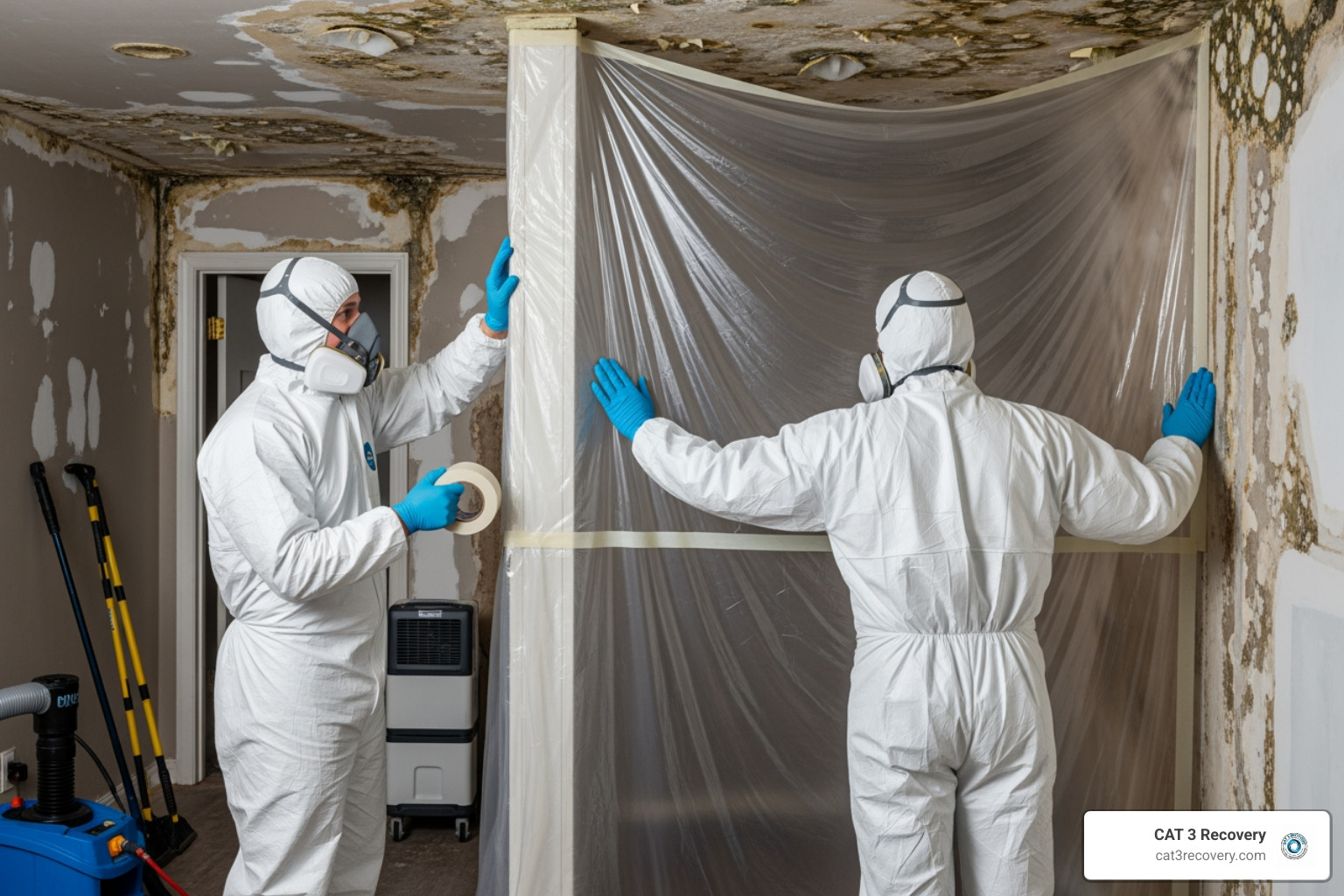
Here’s how we typically approach a mold remediation project:
Step 1: Inspection and Damage Assessment
The first step is always to understand the full scope of the problem. Our certified technicians will conduct a detailed inspection, not just looking at visible mold, but also searching for its hidden sources. We use specialized tools such as:
- Moisture Meters: To detect moisture levels in building materials, even behind walls.
- Thermal Imaging Cameras: To identify temperature differences that can indicate hidden moisture.
- Visual Inspection: Thoroughly examining all accessible areas, including attics, crawl spaces, and basements common in Southwest Florida homes.
During this assessment, we identify the type of mold, the extent of the contamination, and most importantly, the moisture source causing the growth. This allows us to develop a comprehensive remediation plan custom to your specific situation. We can also provide Mold Testing Service if needed, though often, if visible mold is present, sampling isn’t necessary for us to begin the removal process. Any mold growth, regardless of type, needs to be treated and removed.
Step 2: Containment, Removal, and Cleaning
Once the assessment is complete, we move to containment. This is a critical phase to prevent the spread of mold spores during the remediation process. We achieve containment through:
- Physical Barriers: Setting up polyethylene sheeting to seal off the affected area from the rest of your home.
- Negative Air Pressure: Using specialized equipment to create negative air pressure within the contained area, ensuring that any airborne spores are drawn into our filtration systems rather than escaping.
- Air Filtration: High-Efficiency Particulate Air (HEPA) air scrubbers are employed to continuously filter the air, capturing microscopic mold spores and other contaminants.
Next, we proceed with the careful removal of contaminated materials. Items that cannot be properly cleaned and dried within 24-48 hours, such as moldy drywall, insulation, carpeting, or upholstered furniture, must be safely discarded. We then clean all affected hard surfaces using HEPA vacuums and EPA-approved antimicrobial treatments to eliminate mold colonies. While biocides can kill mold, dead mold can still cause allergic reactions, so thorough removal is always the goal. We never recommend mixing cleaning products, especially bleach and ammonia, as this can create toxic fumes. You can find more guidelines in A Brief Guide to Mold, Moisture and Your Home. For comprehensive details on this stage, check out our dedicated Mold Removal page.
Step 3: Drying and Final Restoration
With the mold removed and surfaces cleaned, the next crucial step is thorough drying. Without proper drying, mold will simply return. We use industrial-grade dehumidifiers and air movers to rapidly dry the affected structures and materials, ensuring moisture levels are returned to normal. Our technicians continuously monitor humidity and moisture content to confirm everything is completely dry.
Once drying is complete, we move to the restoration phase. This involves repairing or replacing any building materials that were removed or damaged during the mold remediation process. This could include:
- Repairing or replacing drywall
- Replacing flooring materials
- Repainting affected areas
- Restoring structural components
Before any repairs begin, we ensure the area is thoroughly disinfected and free of moldy odors and visible mold. A final inspection confirms that all signs of mold and water damage are gone, and the air quality is safe for re-occupancy.
When to Call a Professional: DIY Risks and Expert Benefits
While it might be tempting to tackle mold yourself, knowing when to call a professional for mold damage restoration is crucial for your health and the integrity of your home.
The general rule of thumb from the EPA is this: if the moldy area is less than about 10 square feet (less than roughly a 3 ft. by 3 ft. patch), in most cases, you can handle the job yourself. However, for anything larger, or if you suspect hidden mold, professional intervention is highly recommended.
The Dangers of DIY Mold Removal
Attempting to remove a significant mold infestation yourself carries several risks:
- Inhaling Spores: Without proper personal protective equipment (PPE), you risk inhaling mold spores, which can lead to severe allergic reactions, respiratory problems, or worse. OSHA advises wearing an N-95 respirator to limit exposure to airborne mold.
- Cross-Contamination: Improper cleaning techniques can easily spread mold spores to unaffected areas of your home, turning a localized problem into a widespread infestation.
- Improper Cleaning: Simply scrubbing visible mold might not be enough. Mold often has deep roots, and if the source of moisture isn’t addressed and the area isn’t thoroughly dried, the mold will quickly return. Painting or caulking over mold without proper remediation is ineffective and only masks the problem.
- Failure to Address the Source: DIY efforts often overlook the underlying moisture problem. If the source isn’t fixed, the mold will inevitably return, leading to repeated cycles of cleanup.
Professionals like us have the specialized equipment, training, and certifications (such as IICRC) to safely and effectively remove mold, contain its spread, and address the root cause, ensuring long-term prevention.
Understanding the Costs and Insurance Coverage for Mold Damage Restoration
The cost of professional mold damage restoration can vary significantly, as it depends on several factors:
- Infestation Size: The larger the area affected by mold, the more labor and materials will be required.
- Location of Mold: Mold hidden behind walls, under flooring, or in HVAC systems is more complex and costly to access and remediate than surface mold.
- Type of Material: Porous materials like drywall and insulation often need to be removed and replaced, while non-porous surfaces can sometimes be cleaned.
- Moisture Source Repair: The cost to fix the initial water problem (e.g., a leaky pipe) is a separate but essential component.
When it comes to insurance, coverage for mold remediation can be tricky. Most standard homeowner’s insurance policies have specific limits or exclusions for mold, especially if it results from long-term neglect or maintenance issues. However, if the mold is a direct result of a sudden and accidental event (like a burst pipe), there may be coverage. We work directly with insurance providers in Southwest Florida to help steer claims, and we always advise homeowners to document all damage with photos and keep receipts for any expenses.
The Importance of Professional Mold Damage Restoration for Renters
Renters in areas like Estero, Labelle, or Punta Gorda also face mold challenges, but their responsibilities and recourse differ. If you’re a renter and suspect mold, here’s what you need to know:
- Tenant Rights and Landlord Responsibilities: Landlords are generally responsible for maintaining a safe and habitable living environment, which includes addressing significant mold issues caused by structural or maintenance failures.
- Reporting Procedures: Report all plumbing leaks and moisture problems immediately to your building owner, manager, or superintendent in writing. Keep a record of your communication.
- Contacting Health Authorities: If persistent water problems or mold issues are not addressed by your landlord, you may want to contact local, state, or federal health or housing authorities, or your state health department. The Homeowner’s and Renter’s Guide to Mold Cleanup After Disasters provides further guidance on this.
Professional intervention is often necessary for renters because landlords may be required to hire certified professionals to ensure proper remediation and documentation.
Long-Term Prevention: Keeping Your Home Mold-Free
The best way to deal with mold is to prevent it from ever taking hold. In Southwest Florida, with our high humidity, proactive moisture control and good ventilation are your best friends.
The Critical Role of Moisture and Humidity Control
Mold cannot grow without moisture, so controlling the moisture in your home is the single most important step in prevention.
- Act Quickly on Leaks and Spills: Remember the 24-48 hour rule. If wet or damp materials or areas are dried within this timeframe after a leak or spill, mold usually won’t grow. This is why How Long Wet Building Materials Can Stay Before Mold Growth Begins is such a crucial read.
- Maintain Ideal Humidity Levels: Keep your indoor relative humidity between 30% and 50%. You can monitor this with a hygrometer, an inexpensive device.
- Use Dehumidifiers and Air Conditioners: In our humid climate, these appliances are invaluable. Air conditioners remove moisture from the air as they cool, and dehumidifiers actively pull excess moisture out of the air.
- Regular Maintenance: Clean and repair roof gutters regularly, and ensure the ground around your home slopes away from the foundation to prevent water from pooling. Keep air conditioning drip pans clean and drain lines unobstructed.
- Insulate Cold Surfaces: Cover cold pipes or other surfaces that tend to collect condensation with insulation.
Best Practices for Home Ventilation
Proper air circulation and ventilation are key to whisking away moisture before it settles and creates a mold-friendly environment.
- Bathroom Fans: Always use exhaust fans during and after showering or bathing for at least 30 minutes to remove steam.
- Kitchen Vents: Use exhaust fans when cooking or running the dishwasher to vent moisture and steam outdoors.
- Attic and Crawl Space Ventilation: Ensure these areas, especially common in Florida homes, are properly ventilated to prevent moisture buildup.
- Opening Windows: When weather permits, opening windows for even 15-30 minutes a day can significantly improve air exchange and reduce indoor humidity.
- Vent Appliances: Make sure clothes dryers and other moisture-producing appliances are vented to the outside, not into an attic or crawl space.
Conclusion: Reclaiming Your Home with Expert Help
Mold is more than just an unsightly nuisance; it’s a serious threat to both your property and your health. From triggering allergic reactions and respiratory issues to causing structural damage and diminishing your home’s value, the consequences of ignoring mold can be significant. The key takeaway is this: moisture is mold’s best friend, and quick action is your best defense.
While small mold patches might be tackled with caution, anything larger than 10 square feet, or any suspicion of hidden mold, warrants professional attention. Our team at CAT 3 Recovery brings over two decades of experience in mold damage restoration to Southwest Florida. We’re IICRC-certified technicians, committed to rapid, expert-level emergency response, and we pride ourselves on handling insurance claims efficiently, ensuring your property is restored with a focus on your peace of mind and customer service.
Don’t let mold compromise your home or your health. If you suspect or find mold, especially in areas like Cape Coral, Bonita Springs, or Port Charlotte, reach out to the experts. We’re here to help you reclaim a safe and healthy living environment. Contact us for expert mold removal in Cape Coral, FL today.
