

Why a Water Damage Restoration Specialist is Critical When Disaster Strikes
A water damage restoration specialist is a trained professional who responds to water emergencies, assesses contamination levels, extracts water, performs structural drying, prevents mold growth, and restores your property to pre-loss condition while coordinating with your insurance company.
What a Water Damage Restoration Specialist Does:
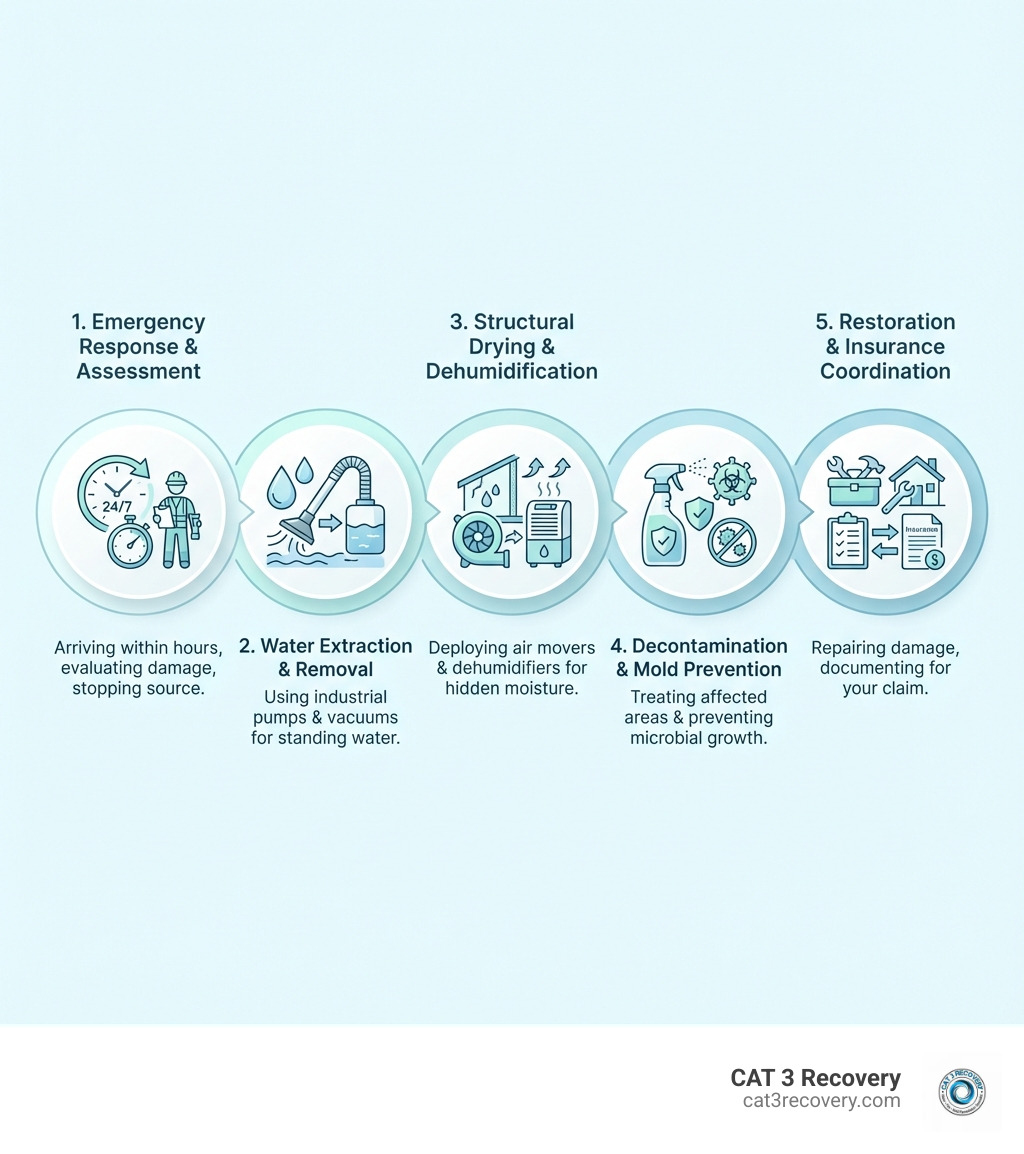
- Emergency Response – Available 24/7 to respond within hours of your call
- Damage Assessment – Identifies water category (clean, grey, or black) and extent of damage
- Water Extraction & Drying – Removes standing water and uses industrial equipment to dry structures
- Mold Prevention – Acts within 24-48 hours to prevent microbial growth
- Decontamination – Treats contaminated water with proper safety protocols
- Insurance Coordination – Documents damage and works directly with your insurance company
- Complete Restoration – Repairs and rebuilds damaged structures to restore your property
When you find water damage in your home, your first reaction is probably panic. Is this going to destroy my house? How much will this cost? Where do I even start?
You’re not alone. According to industry estimates, 14,000 people experience water damage emergencies each day in the United States. And the statistics are sobering: within just 24 hours, water begins absorbing into porous materials like drywall and wood, damaging electrical systems and creating the perfect environment for mold to spread. By one week, standing water can compromise the structural integrity of your walls, floors, and support beams.
This is where a water damage restoration specialist becomes your lifeline. These aren’t just cleanup crews with shop vacs and fans—they’re highly trained professionals who understand water behavior, contamination levels, advanced drying science, and how to save your property from permanent damage. They know that every hour counts, and they have the expertise and equipment to stop the destruction before it spirals out of control.
The difference between calling a specialist immediately and waiting “just a day or two” can mean the difference between a manageable repair and a catastrophic loss. Water damage that starts as a Category 1 clean water leak can quickly degrade into Category 2 or even Category 3 contaminated water, bringing bacteria, pathogens, and life-threatening health risks into your home.
I’m Nino Espinoza, owner of CAT 3 Recovery, and I’ve spent over 20 years as a water damage restoration specialist responding to some of Southwest Florida’s most challenging water emergencies, from hurricane flooding to sewage backups. I’ve seen how the right response in those critical first hours can save a home—and how delays or improper drying can create problems that haunt property owners for years.
Understanding the Enemy: The Categories and Dangers of Water Damage
Not all water damage is created equal. The source of the water dictates its contamination level, which in turn determines the health risks and the necessary approach to restoration. Understanding these categories is crucial, as a water damage restoration specialist uses these classifications, guided by IICRC (Institute of Inspection, Cleaning and Restoration Certification) standards, to develop a safe and effective restoration plan. Ignoring the contamination level can lead to severe health hazards and structural damage. What might start as “clean” water can quickly become contaminated if left untreated, escalating the risks and complexity of the cleanup.
Here’s a quick look at the categories:
| Category | Source Examples | Contamination Level | Health Risks | Required Response |
|---|---|---|---|---|
| 1 | Broken water supply lines, overflowing sinks | “Clean” or “Sanitary” | Minimal initial risk, but can degrade quickly | Prompt drying, often salvageable materials |
| 2 | Dishwasher overflow, washing machine leaks | “Grey Water” – Significant contamination | Can cause sickness if ingested or contacted without PPE | Professional assessment, PPE, decontamination, careful material handling |
| 3 | Sewage backup, natural flooding (rivers, groundwater) | “Black Water” – Grossly contaminated, unsanitary | Life-threatening, contains toxins, bacteria, pathogens; severe illness or harm | Immediate professional intervention, full PPE, specialized decontamination, often material replacement |
Category 1: Clean Water
Category 1 water damage originates from a “clean” or “sanitary” source. Think of a broken water supply line, a leaking faucet, or an overflowing bathtub. While this water doesn’t initially pose a substantial risk to humans upon exposure, its innocence is fleeting. If left standing for even a short period, clean water can absorb into porous materials, providing the perfect environment for bacteria and mold to begin growing. This means a Category 1 situation can quickly degrade into a Category 2 or even Category 3 within 24-48 hours.
Even clean water can cause significant property damage if not addressed promptly. It can lead to peeling paint, warped wood floors, and damage to electrical wiring. That’s why even a seemingly minor leak in areas like Estero, FL requires immediate attention from a water damage restoration specialist.
Category 2: Grey Water
Category 2 water, often referred to as “grey water,” is significantly contaminated. It comes from sources like an overflowing dishwasher, a washing machine leak, or a toilet overflow that contains only urine. While not as immediately dangerous as black water, grey water can contain potentially harmful microorganisms, chemicals, or biological matter. Trying to mitigate this type of damage without proper protective gear can cause harm and lead to illness.
If your home in Southwest Florida experiences a toilet overflow cleanup that involves grey water, it’s crucial to call in professionals. They have the necessary personal protective equipment (PPE) and expertise to handle the contamination safely, preventing it from spreading and turning into an even more hazardous Category 3 situation.
Category 3: Black Water
This is the most dangerous category of water damage, known as “black water.” Category 3 water is “grossly contaminated” and comes from highly unsanitary sources. This includes sewage backups, floodwaters from rivers, oceans, or groundwater, and even long-standing grey water that has had time to breed bacteria and pathogens. Black water poses a severe threat to human health, as it can contain toxins, bacteria, viruses, and other pathogens that can cause severe illness or even be life-threatening if ingested, inhaled, or touched without appropriate PPE.
Dealing with sewage backup cleanup in your home or business in Fort Myers or Cape Coral requires immediate and professional intervention. A water damage restoration specialist will approach black water situations with extreme caution, utilizing specialized decontamination techniques and often recommending the removal and replacement of heavily contaminated porous materials to ensure safety and prevent long-term health risks.
What Does a Water Damage Restoration Specialist Actually Do?
When water strikes, you need more than just a quick mop-up. A water damage restoration specialist is your comprehensive solution, equipped to handle every aspect of the disaster from the moment they arrive until your property is fully restored. Their role goes beyond simple cleanup; it’s about expert assessment, scientific drying, and thorough decontamination.
Our specialists are not just general contractors; they are IICRC-certified professionals, meaning they have undergone rigorous training and adhere to industry-leading standards for water damage restoration. This certification ensures they understand water behavior, drying science, safety protocols, and proper remediation techniques. We act quickly because we know that for every hour of delay, the problem worsens, and the risk of secondary damage, like mold growth, increases exponentially.
Key Services Provided by a Water Damage Restoration Specialist
A professional water damage restoration specialist offers a suite of services designed to address all facets of water intrusion, ensuring a thorough and lasting recovery. Here at CAT 3 Recovery, our services include:
- 24/7 Emergency Service: Water damage doesn’t wait for business hours, and neither do we. Our teams are on call around the clock, ready to respond to your emergency in Southwest Florida, whether it’s a burst pipe in the middle of the night in Port Charlotte or a flooded basement in Naples after a storm. We aim to be on-site within hours to mitigate further damage.
- Water Extraction: This is the immediate removal of standing water using powerful pumps and industrial-grade wet vacuums. The faster water is extracted, the less it can absorb into materials, reducing drying times and secondary damage.
- Structural Drying: After visible water is removed, hidden moisture remains in walls, floors, and structural elements. Specialists use advanced equipment like air movers and commercial dehumidifiers to dry these areas thoroughly and prevent long-term issues.
- Dehumidification: Controlling humidity levels is crucial. High humidity can lead to mold growth even after standing water is gone. Dehumidifiers pull moisture from the air, accelerating the drying process and preventing microbial activity.
- Decontamination: For grey or black water incidents, decontamination is paramount. We use specialized antimicrobial treatments to clean and sanitize affected surfaces, eliminating harmful bacteria, viruses, and other pathogens.
- Odor Removal: Water damage, especially from contaminated sources or if left untreated, can leave pervasive odors. Our specialists use professional deodorization techniques to eliminate these unpleasant smells, not just mask them.
- Contents Restoration: Many personal belongings can be salvaged. We offer services to clean, dry, and restore items like furniture, documents, and other valuables that have been affected by water.
- Insurance Coordination: Navigating insurance claims can be overwhelming. We work directly with your insurance company, documenting the damage with photos, readings, and logs to ensure a smooth claims process and proper coverage.
The Step-by-Step Restoration Process
When you call a water damage restoration specialist, you’re engaging a systematic, proven approach to recovery. Our restoration guide outlines a detailed process that brings your property back to normal.
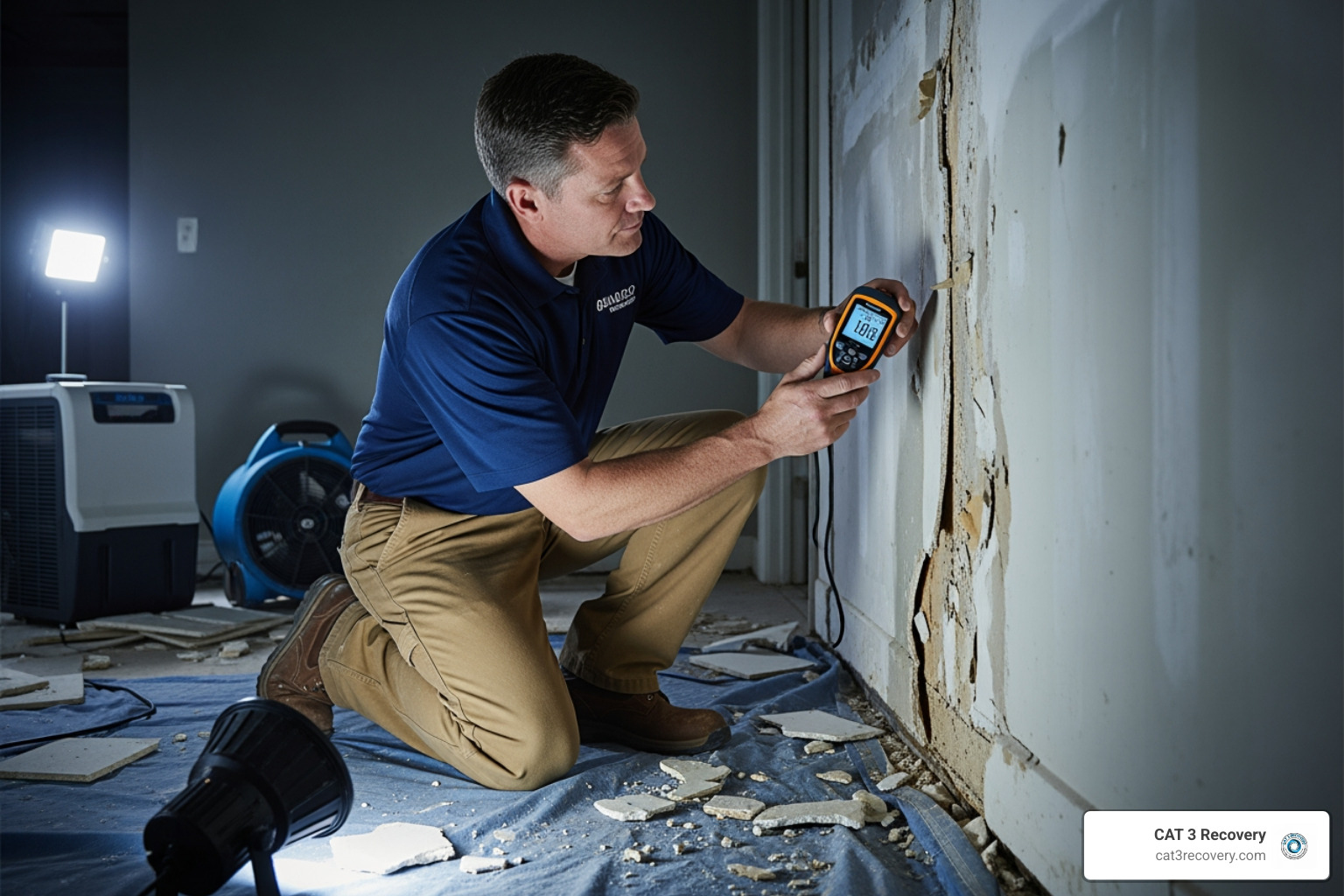
- Initial Inspection and Assessment: Upon arrival, our IICRC-certified technicians conduct a thorough inspection. This involves identifying the water source, stopping it if necessary (e.g., shutting off your water main for a pipe burst cleanup), assessing the category of water, and determining the extent of the damage to both visible and hidden areas. We use specialized tools like moisture meters and thermal imaging to detect moisture behind walls and under floors.
- Water Removal/Extraction: This is the immediate removal of all standing water. High-powered extraction equipment is deployed to quickly pull water from carpets, padding, subfloors, and other materials.
- Drying and Monitoring: Once standing water is gone, the focus shifts to drying the structure. Air movers create airflow across wet surfaces, and industrial-grade dehumidifiers remove moisture from the air. We continuously monitor temperature, humidity, and moisture levels in affected areas to ensure optimal drying conditions and prevent secondary damage. This monitoring is critical to confirming that all areas are dried to approved industry standards.
- Cleaning and Sanitizing: All affected surfaces are cleaned, sanitized, and deodorized. For Category 2 and 3 water damage, this step is particularly rigorous, involving antimicrobial treatments to eliminate contaminants and prevent mold growth.
- Repair and Reconstruction: The final phase involves repairing or rebuilding any damaged structural elements or contents. This could range from replacing drywall and flooring to repainting and restoring cabinetry, ensuring your home in Cape Coral or Punta Gorda looks and feels like new.
Specialized Equipment a Water Damage Restoration Specialist Uses
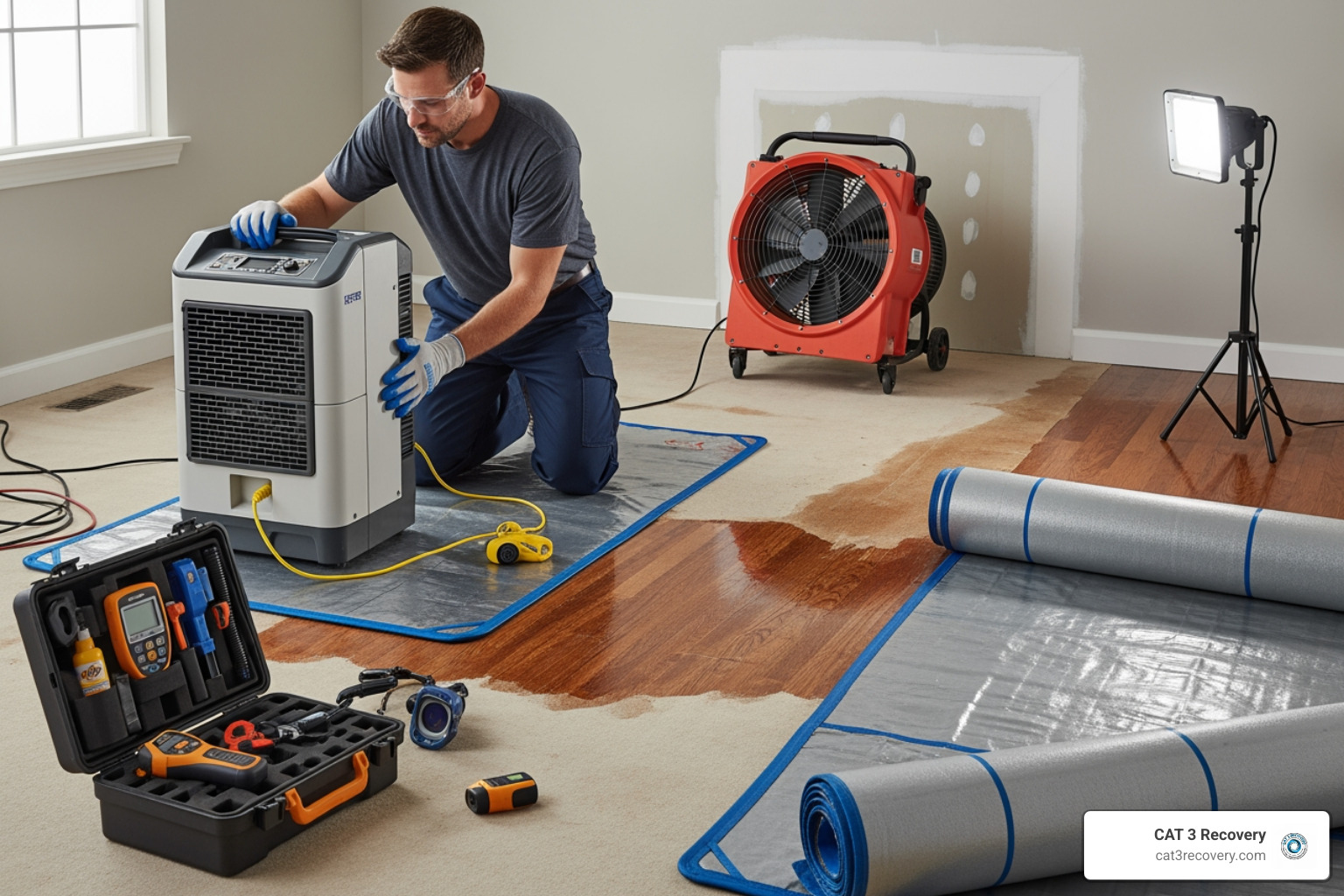
Forget the shop vacs and household fans – a professional water damage restoration specialist relies on a sophisticated arsenal of specialized equipment. This advanced technology allows us to perform efficient and effective drying that DIY methods simply cannot match. As we discuss in our article, “Why Shop Vacs and Fans Don’t Properly Dry Water Damage“, these tools are essential for complete moisture removal.
- Moisture Meters: These handheld devices detect moisture content in various materials (wood, drywall, concrete) and at different depths. They are crucial for identifying hidden water pockets and for monitoring the drying process to ensure all affected areas reach appropriate dryness levels.
- Thermal Imaging Cameras: Also known as infrared cameras, these tools visualize temperature differences, allowing specialists to pinpoint areas of moisture intrusion that are invisible to the naked eye, often behind walls or under flooring. This significantly reduces the need for destructive demolition.
- High-Volume Air Movers: These powerful fans are strategically placed to create rapid airflow across wet surfaces, accelerating evaporation and driving moisture out of materials.
- Commercial-Grade Dehumidifiers: These machines extract moisture from the air, lowering humidity levels and preventing secondary damage like mold growth. There are various types, including refrigerant and desiccant dehumidifiers, chosen based on the specific conditions of the affected environment.
- Submersible Pumps and Water Extractors: For large volumes of standing water, submersible pumps quickly remove water from flooded basements or rooms. Water extractors, similar to powerful carpet cleaners, are used to pull water from carpets, upholstery, and other porous materials.
- Air Scrubbers: These devices filter the air, removing airborne contaminants, dust, mold spores, and odors, which is especially important in cases of contaminated water or mold growth.
- MICA Technology: This web-based monitoring system allows us to assess and track water levels throughout the drying process, providing real-time data to both property owners and insurance professionals. This drastically reduces the time and cost of water damage repair and helps streamline insurance claims.
The First 48 Hours: Your Immediate Action Plan
When water damage occurs, time is not just money; it’s the difference between minor repairs and extensive, costly restoration. The clock starts ticking the moment water intrudes. Within 24 hours, water will absorb into porous materials, wreaking havoc on electrical wiring and creating the perfect breeding ground for mold. By one week, standing water can severely compromise the structural integrity of your home’s walls, floors, and beams. Bacteria and pathogens also begin to spread rapidly, especially with contaminated water.
This urgency underscores why acting quickly is paramount. A fast response from a trained water damage restoration specialist can dramatically reduce the extent of the damage, minimize health risks, and lower overall restoration costs.
Here are 5 immediate steps to take when you find water damage:
- Ensure Safety First: Prioritize the well-being of everyone on the property. If there’s standing water and it’s safe to do so, evacuate.
- Stop the Source: If possible and safe, find the source of the water and shut it off. This might mean turning off the main water supply to your home, especially for issues like a water heater burst or a burst pipe.
- Document the Damage: Take extensive photos and videos of all affected areas and damaged belongings. This documentation is crucial for your insurance claim.
- Remove Valuables (If Safe): If you have furniture or personal items in the affected area that have not yet been damaged, move them to a dry, safe location.
- Call a Water Damage Restoration Specialist Immediately: Do not delay. The sooner professionals are on-site, the better the outcome.
Safety First: What to Do and What NOT to Do
In the immediate aftermath of water damage, your safety and the safety of your family are paramount. While the instinct might be to jump into action, it’s crucial to understand what to do and, more importantly, what NOT to do.
What to Do:
- Turn Off Electricity: If there is any standing water, especially in a house flooding situation, disconnect the power to the affected areas at the breaker box. Water and electricity are a deadly combination.
- Evacuate if Necessary: If the water is deep, contaminated, or if you suspect structural damage or electrical hazards, evacuate the property immediately.
- Protect Belongings: If it’s safe, move furniture, electronics, and other valuables to a dry area to prevent further damage.
- Open Windows: If the weather permits and it’s safe, open windows to begin air circulation and reduce humidity.
- Call Us: Contact a water damage restoration specialist right away. Our 24/7 emergency services mean we can provide the support you need, exactly when you need it.
What NOT to Do:
- Do NOT enter rooms with standing water until the electricity has been turned off.
- Do NOT use electrical appliances while standing on wet carpets or floors.
- Do NOT use a household vacuum cleaner to remove water. These are not designed for water extraction and can pose an electrical hazard.
- Do NOT attempt to remove wall-to-wall carpeting or lift tacked-down carpet without professional help. You could cause further damage or spread contaminants.
- Do NOT disturb visible mold. If you see mold, leave it to the professionals.
- Do NOT venture into flood water if it’s from an external source (like a river or groundwater). It can contain harmful chemicals, sewage, and be electrically charged.
Uncovering Hidden Dangers and Preventing Mold
One of the most insidious aspects of water damage is its ability to hide, leading to long-term problems like structural decay and mold growth. Even after visible water is gone, moisture can linger behind walls, under floorboards, and within insulation, creating a perfect environment for mold to thrive.
How do you know if you have hidden water damage or mold?
- Musty Odors: The most telltale sign of mold growth is a persistent, musty, earthy smell. If you notice strange odors in an impacted area, there’s a good chance mold has started to grow, even if it’s not visible.
- Peeling, Bubbling, or Cracking Paint/Wallpaper: Water absorbing into drywall or plaster can cause paint to blister, peel, or bubble.
- Warped or Discolored Flooring: Wood floors can warp, buckle, or show dark discoloration. Carpets might feel damp or spongy long after the initial incident.
- Stains on Ceilings or Walls: Water rings, which are light brown in color, or dark spots on ceilings and walls are clear indicators of water intrusion, often from a ceiling leak repair issue.
- Allergic Reactions: Unexplained allergy-like symptoms (sneezing, coughing, itchy eyes, skin irritation) when inside your home can be a sign of mold exposure.
These are just a few of the hidden water damage signs you can’t ignore. A water damage restoration specialist uses specialized equipment like thermal imaging and moisture meters to detect these hidden pockets of moisture. This is critical because improper structural drying causes mold after water damage. If all moisture isn’t removed, mold can begin to grow within 24-48 hours, leading to further damage and potential health issues. Our mold remediation services in Port Charlotte, Bonita Springs, and throughout Southwest Florida are designed to address these concerns head-on.
Navigating the Aftermath: Insurance and Prevention
Dealing with water damage is stressful enough without having to battle your insurance company. A professional water damage restoration specialist can be an invaluable ally in navigating the insurance claims process, ensuring you receive the coverage you deserve.
Most homeowners insurance policies do cover water damage if the cause is sudden and accidental, such as a burst pipe or a malfunctioning appliance. However, coverage can vary greatly depending on your specific policy and the cause of the water intrusion. For instance, flood damage from natural disasters (like hurricanes common in our part of Florida) typically requires a separate flood insurance policy. Issues arising from gradual leaks or neglected maintenance may also be denied. Our specialists work directly with your insurance company, providing thorough documentation including photos, readings, and logs to substantiate your claim. This detailed approach, as outlined in “How to Document Water Damage for Insurance: Photos, Readings, Logs“, helps streamline the process and ensures an accurate assessment of the damage. We aim to make the water damage restoration experience as hassle-free as possible for you.
Proactive Prevention: Protecting Your Property
While it’s impossible to prevent every single instance of water damage, many common causes can be mitigated with proactive measures. Taking steps to protect your property can save you significant stress and expense in the long run, especially in areas like Southwest Florida prone to heavy rains and humidity.
Here’s how you can protect your home and commercial property from flooding and other water damage:
- Insulate Pipes: In cooler months, especially in areas like North Fort Myers or Lehigh Acres, insulating exposed pipes can prevent them from freezing and bursting, a common cause of significant water damage.
- Maintain Drainage Systems: Ensure all drainage systems around your property are working effectively and are not clogged. This includes French drains and yard grading that directs water away from your foundation.
- Keep Gutters Free of Debris: Clogged gutters can cause rainwater to overflow and pool around your foundation or seep into your roof and walls, leading to leaks and structural damage. Regular cleaning is essential.
- Have Your Roof Inspected Annually: A leaking roof can lead to significant ceiling leak repair and interior water damage. Regular inspections can catch small issues before they become major problems.
- Check Your Sump Pump: If you have a basement or crawl space, ensure your sump pump is working properly, especially before heavy rain events. Test it periodically and consider a battery backup for power outages.
- Inspect Appliances and Hoses: Regularly check hoses for washing machines, dishwashers, refrigerators, and water heaters for any signs of wear, cracks, or leaks. Replace them every few years as a preventative measure.
- Monitor Water Bills: An unexplained increase in your water bill could indicate a hidden leak somewhere in your plumbing system.
- Address Leaks Promptly: Even small drips can lead to major problems over time. Repair any leaks you find immediately.
Taking these preventative steps can significantly reduce your risk of needing a water damage restoration specialist, but remember, accidents can still happen. That’s why knowing who to call for rapid, expert assistance is crucial.
Conclusion: Your Partner in Recovery
Water damage is a common catastrophe, and it can be deeply distressing, threatening the integrity of your home and the well-being of your family. From minor leaks to catastrophic floods, the potential for structural damage, mold growth, and health risks is significant. However, you don’t have to face it alone.
A professional water damage restoration specialist is your essential partner in recovery, offering rapid, expert-level emergency response, IICRC-certified methods, and comprehensive services from water extraction and structural drying to decontamination and full reconstruction. We understand that time is of the essence, and our immediate intervention can save your property from further degradation, prevent mold, and protect your long-term investment.
At CAT 3 Recovery, we are dedicated to providing top-quality work and unbeatable customer service to property owners throughout Southwest Florida, including Bonita Springs, Cape Coral, Fort Myers, Naples, and beyond. We combine our 20+ years of experience with advanced technology to handle every aspect of your water damage emergency, minimizing your stress and restoring your peace of mind.
When disaster strikes, immediate and professional water damage mitigation is your first line of defense. Don’t hesitate to call us. We’re here to help you through every step of the process, ensuring a complete recovery and restoring your property to its pre-loss condition, or better.
