

When Every Second Counts: Responding to a Burst Pipe Emergency
Water pipe burst in house, what to do is a question that demands immediate answers—because every minute you wait, hundreds of gallons of water can flood into your walls, floors, and ceilings, turning a plumbing emergency into a full-scale disaster.
If a pipe has just burst in your home, here’s what to do right now:
- Shut off the main water supply immediately at your home’s main shut-off valve
- Turn off the electricity at the breaker panel if water is near the outlets or appliances
- Call an emergency plumber and water damage restoration company (like CAT 3 Recovery)
- Remove standing water using mops, towels, or a wet-dry vacuum
- Document all damage with photos and videos for your insurance claim
A burst pipe doesn’t just create a mess—it can cause massive structural damage in hours. Water seeps into walls, saturates insulation, weakens floors, and creates the perfect environment for mold growth within 24 to 48 hours. The longer water sits, the more expensive and complicated the restoration becomes.
Whether it’s a frozen pipe that cracked during a rare Florida cold snap, corroded plumbing that finally gave way, or excessive water pressure that overwhelmed your system, the response is the same: act fast, prioritize safety, and get professional help immediately.
I’m Nino Espinoza, owner of CAT 3 Recovery, and I’ve spent over 20 years responding to emergencies exactly like this across Southwest Florida, from hurricane flooding to hidden pipe failures—water pipe burst in house what to do is a question I’ve helped hundreds of homeowners answer in real-time, often in the middle of the night. My team and I know that the first few hours after a burst pipe determine whether you’re looking at a manageable repair or a devastating loss.
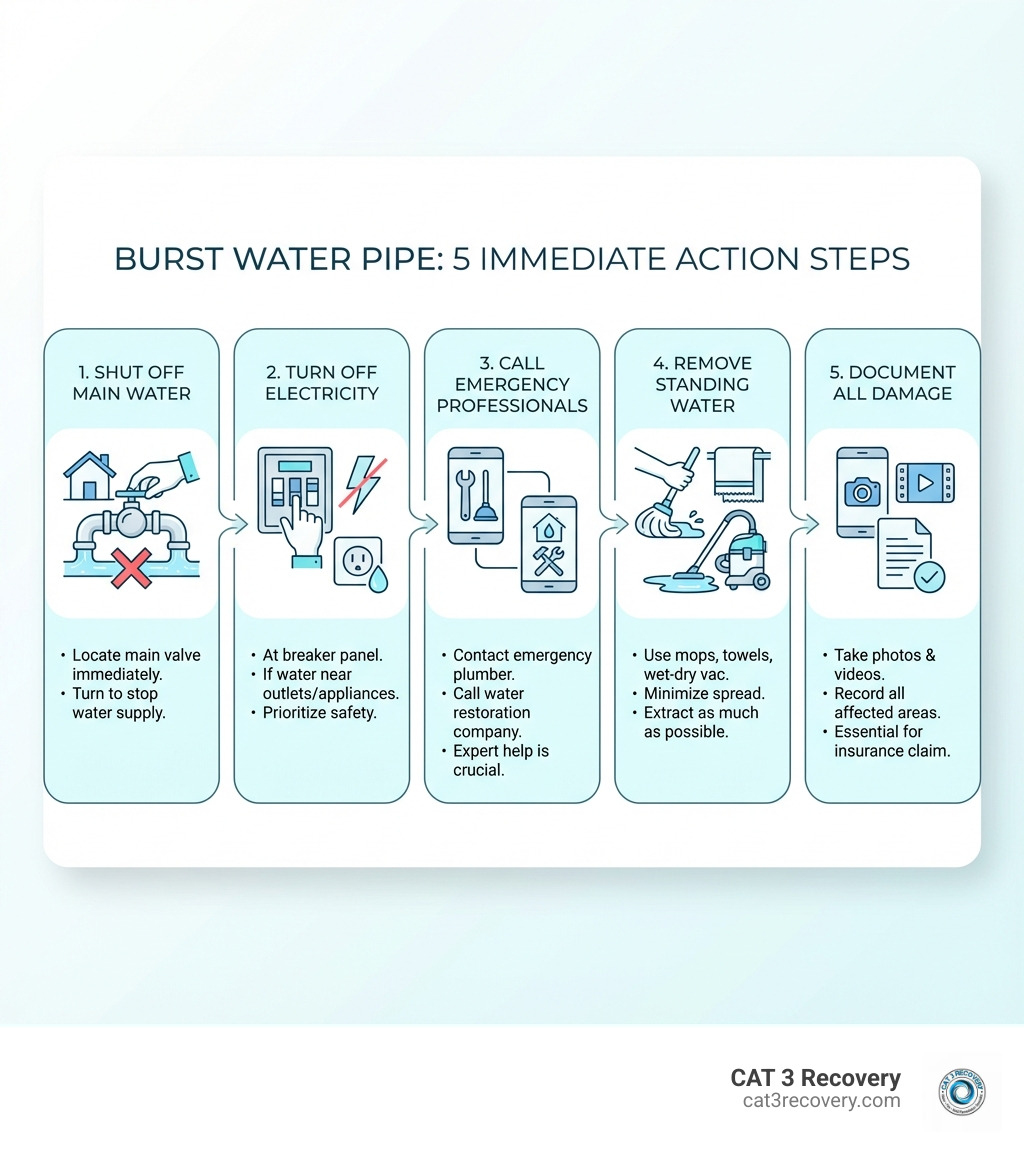
Water Pipe Burst in House: What to Do: Your Immediate Action Plan
When a pipe bursts, chaos can quickly ensue. But don’t panic! The key is to act quickly and systematically. The first 30 minutes after finding a burst pipe are critical for minimizing damage and ensuring your family’s safety. Our priority is always safety first, followed by damage control and then the emergency response.
Step 1: Safely Shut Off Water and Electricity
This is the absolute first thing you must do. Stopping the flow of water at its source is the single most effective way to prevent further damage.
- Locate Your Main Water Shut-Off Valve: Every home has a main water shut-off valve. In Southwest Florida homes, this is typically located outside near your water meter, or inside your garage, utility closet, or under the kitchen sink. It’s often a red or yellow handle, or a wheel. Turn it clockwise until the water stops flowing. If you’re unsure where it is, our friends at The Spruce offer a helpful guide on how to find your main water shut-off valve. We highly recommend every homeowner know its location before an emergency strikes.
- Turn Off Electricity: Water and electricity are a dangerous combination. If the burst pipe is near any electrical outlets, appliances, or your home’s main electrical panel, you must turn off the power to that area, or even the entire house, at your breaker panel. This eliminates the risk of electrical shock or electrocution. If you have to walk through standing water to reach the breaker, call an electrician immediately rather than risking your safety.
- Drain Remaining Water: Once the main water supply is off, open all cold water faucets in your home, starting with the lowest level, to drain any remaining water from the pipes. Flush all toilets to empty their tanks and bowls. If your water heater is affected, you might also want to shut it off (if safe to do so) and open hot water taps to drain it. This relieves pressure and helps reduce the total volume of water that could leak.
Step 2: Call for Emergency Professional Help
Once safety measures are in place, your next call should be to the professionals. This isn’t a DIY job for long-term solutions.
- Emergency Plumber: You’ll need a licensed plumber to repair the burst pipe itself. They have the expertise and specialized tools to diagnose the cause, fix the break, and ensure your plumbing system is restored to proper working order. While temporary fixes like pipe repair tape or clamps might slow a leak, they are never a permanent solution.
- Water Damage Restoration Company: Immediately after calling a plumber, contact a professional water damage restoration company like CAT 3 Recovery. We are IICRC Certified Firms, meaning our technicians are trained in the industry’s best practices for water removal, drying, and restoration. We offer 24/7 emergency services across Southwest Florida, from Bonita Springs to Cape Coral, Fort Myers to Punta Gorda. Our rapid response is crucial for mitigating damage. You can learn more about our comprehensive approach to water damage mitigation here. We’ll provide an expert assessment and begin the specialized drying process that prevents secondary damage.
Step 3: Begin Initial Cleanup and Damage Control
While waiting for the professionals, there are things you can do to further minimize the damage.
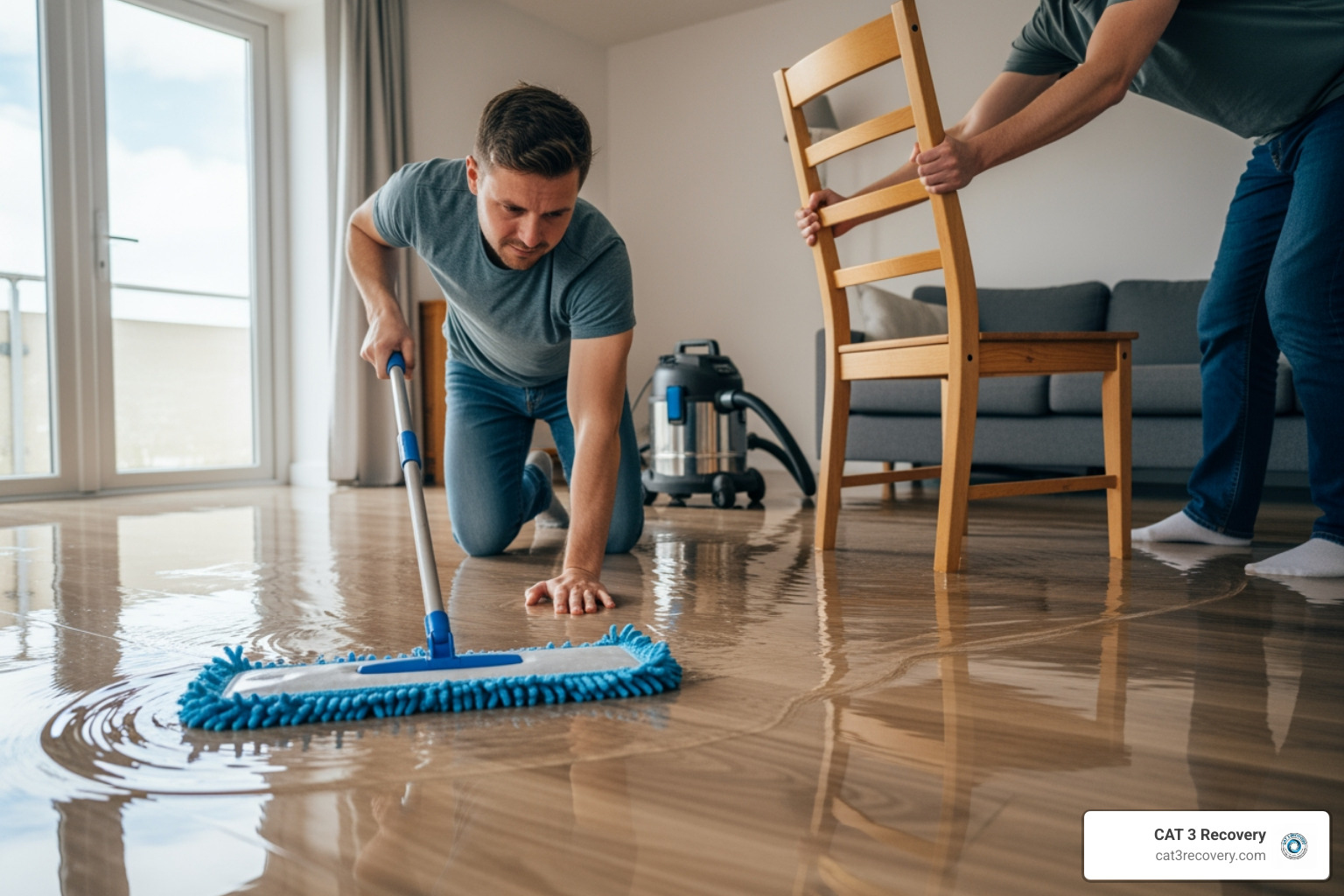
- Remove Standing Water: Use buckets, mops, or a wet-dry vacuum to remove as much standing water as possible. Every drop you remove helps reduce the saturation of your home’s structure and contents.
- Move Valuables and Furniture: Carefully move any valuable items, electronics, rugs, and furniture out of the affected area. If furniture cannot be moved, place aluminum foil or plastic wrap under the legs to prevent water from wicking up into the wood or fabric.
- Contain the Leak: If the leak is still actively dripping despite shutting off the main water, place buckets or containers to catch the water. While duct tape is not a solution for pipe repair, it can sometimes be used in conjunction with a towel or rubber patch as a very temporary measure to slow a leak until a plumber arrives. However, our unique opinion is to forget the pipe sealants and tape; call a professional plumber right away. A burst pipe isn’t something you should tackle on your own.
Assessing the Aftermath and Preventing Long-Term Issues
Once the immediate crisis is under control and the water flow has stopped, the real work of assessment and restoration begins. Burst pipes don’t just create puddles; they lead to hidden damage, secondary problems, and can compromise your home’s structural integrity and even your family’s health if not handled correctly.
Hidden Signs: What to Do When a Pipe Bursts Behind a Wall
Sometimes, a pipe doesn’t burst in plain sight. It can happen within walls, ceilings, or under floors, making detection trickier. If you suspect a hidden leak or burst, look for these tell-tale signs:
- Musty Odors: A persistent, damp, or earthy smell, especially in areas like basements or utility rooms, often indicates hidden moisture and potential mold growth.
- Wall Discoloration or Stains: Water stains, damp spots, or dark patches on walls, ceilings, or floors are clear indicators of a leak. These might appear as brown or yellow rings.
- Bubbling, Peeling Paint or Wallpaper: Moisture behind a wall can cause paint to bubble or peel, and wallpaper to lift or tear.
- Unexplained High Water Bills: A sudden, significant increase in your water bill without a change in usage is a strong sign of a leak somewhere in your plumbing system.
- Low Water Pressure: If you notice a sudden drop in water pressure from faucets or showerheads, it could mean water is escaping elsewhere in the system due to a leak or burst.
- Sounds Behind Walls: Dripping, running, or trickling sounds coming from inside your walls, even when all water fixtures are off, can point to a hidden leak.
For more detailed information on detecting these elusive problems, check out our guide on hidden water damage signs you can’t ignore. Early detection can save you thousands in remediation costs.
The Dangers of Lingering Moisture: Mold and Structural Damage
Water damage is a race against time, especially in Florida’s humid climate. Our research shows that mold can begin to grow on damp surfaces in as little as 24 to 48 hours.
- Mold Growth: Once mold sets in, it creates a health hazard and a much bigger cleanup project. It can cause respiratory issues, allergies, and can spread rapidly if not addressed. Proper drying within the first 24-48 hours is crucial to prevent mold. The EPA provides excellent resources on how to prevent mold growth after water damage.
- Structural Compromise: Beyond mold, lingering moisture leads to severe structural damage. Wood rot can weaken framing, drywall can disintegrate, and even concrete foundations can be compromised over time. This is particularly concerning in areas like Fort Myers or Cape Coral where homes are built to withstand specific environmental stresses.
- Why Improper Structural Drying Causes Mold: It’s not enough to simply remove visible water. Moisture can wick into porous materials like drywall, wood, and insulation, creating pockets of dampness perfect for mold. Our article on why improper structural drying causes mold after water damage digs deeper into this critical issue.
Why DIY Drying Isn’t Enough
After a pipe burst, many homeowners grab their shop-vac and household fans, thinking they can dry out the area themselves. While these can help with superficial water removal, they are often insufficient for proper structural drying.
- Shop-vac Limitations: A typical shop-vac removes surface water but cannot extract moisture embedded deep within materials like carpet padding, subflooring, or drywall.
- Household Fans: Standard fans circulate air but lack the power to create the necessary airflow for rapid evaporation and moisture removal from saturated building materials. They often just move humid air around, which can even hinder drying in a high-humidity environment like Southwest Florida.
- Trapped Moisture: Moisture trapped within walls, floors, and ceilings will continue to cause damage and foster mold growth. It’s the hidden moisture that poses the greatest long-term threat.
- Professional Equipment: This is where professional water damage restoration companies like CAT 3 Recovery come in. We use industrial-grade dehumidifiers, high-velocity air movers, and specialized moisture meters to detect and extract hidden moisture. Our techniques ensure thorough drying, preventing secondary damage and mold. Our article on why shop vacs and fans don’t properly dry water damage explains this in detail. We focus on true structural drying, not just surface-level cleanup.
Navigating Insurance and Preventing Future Disasters
Dealing with the aftermath of a burst pipe involves not only physical repairs but also navigating the complexities of insurance claims and taking steps to prevent future incidents.
Documenting Everything for Your Insurance Claim
One of the most crucial steps after a burst pipe is thorough documentation. This will be invaluable when filing your homeowner’s insurance claim.
- Photo and Video Evidence: Before you touch anything or begin extensive cleanup, take clear photos and videos of all damaged areas and items. Get wide shots of rooms and close-ups of specific damage (e.g., water lines on walls, damaged furniture, the burst pipe itself). Our research shows that water damage claims often include at least 1,000 photos, so don’t be shy with your camera!
- Damaged Items Inventory: Create a detailed list of all damaged possessions, including brand, model, approximate age, and estimated value. If possible, include receipts.
- Keep Receipts: Save all receipts for any cleanup products, temporary repairs, or services you paid for. Your insurance company may reimburse you for these expenses.
- Adjuster Inspection: Your insurance adjuster will need to inspect the damage. Having clear documentation will help them understand the scope of the incident. Our restoration company also keeps detailed logs and readings throughout the drying process, which can support your claim. We have an entire resource dedicated to how to document water damage for insurance photos readings logs.
Future-Proofing Your Home: What to Do to Prevent a Water Pipe Burst
While we can’t control every factor, many pipe bursts are preventable. Understanding the common causes allows us to take proactive steps, especially in a region like Southwest Florida.
-
Common Causes of Burst Pipes:
- Freezing Temperatures: Although rare, a sudden cold snap in Florida can cause water in exposed pipes to freeze and expand, leading to a burst. Our research indicates that pipes can freeze and burst when temperatures hit 20°F for six to eight hours, or even at 32°F with poor insulation.
- Corrosion: Older pipes, especially galvanized steel, can corrode from the inside out due to rust, mineral deposits, and water pH imbalances. This weakens the pipe walls until they eventually fail. This is a common issue in many of our older homes in Naples, Marco Island, and Fort Myers.
- High Water Pressure: Constant water pressure above 80 psi (normal is 40-80 psi) puts immense strain on your plumbing system, leading to weakened joints and eventual bursts.
- Clogs: Blockages in pipes can cause pressure to build up behind them, stressing the pipe until it bursts.
- Aging Pipes: Over time, all pipes degrade. Older homes in places like Punta Gorda or Sanibel Island might have original plumbing that is simply past its prime.
- Pipe Movement: Shifting ground, settling foundations, or even construction near your home can stress pipes and cause them to crack.
-
Prevention Strategies:
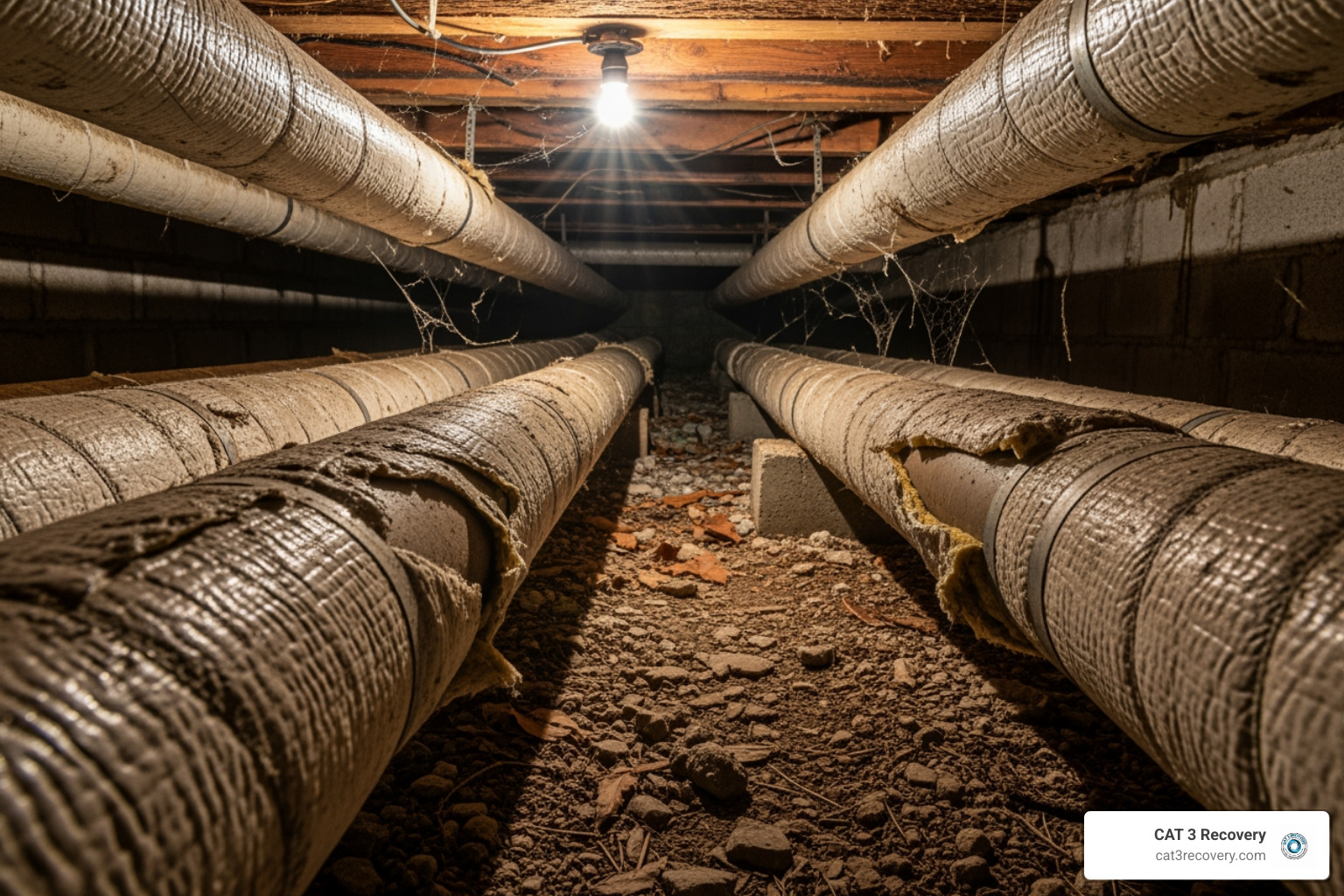
- Pipe Insulation: Insulate any exposed pipes in unheated areas like attics, crawl spaces, or garages. This is crucial during our infrequent cold weather events.
- Thermostat Settings: During colder months, keep your home’s thermostat set to at least 55°F (13°C), even when you’re away. Opening cabinet doors under sinks can also allow warmer air to reach pipes.
- Regular Plumbing Inspections: Have a licensed plumber conduct annual inspections, especially for older homes. They can identify signs of corrosion, high pressure, or other vulnerabilities before they become a disaster. Our article on common causes of water damage in Fort Myers homes provides more insights.
- Address Leaks Promptly: Even a small drip can indicate an underlying issue that could lead to a burst.
- Water Pressure Regulator: Consider installing a water pressure regulator if your home’s pressure is consistently too high.
- Drain Pipes for Vacations: If you’re leaving your Southwest Florida home for an extended period, especially during colder months, consider shutting off the main water supply and draining your pipes.
Frequently Asked Questions About Burst Pipes
We hear a lot of questions from homeowners dealing with burst pipes. Here are some of the most common ones:
How much does it cost to fix a burst pipe and the resulting damage?
The cost can vary significantly depending on the extent of the damage, the location of the pipe, and whether it caused flooding.
- Pipe Repair Costs: A basic pipe fix can range from $150 – $500, while major pipe replacement, especially if it involves opening walls or floors, can cost $1,000 – $5,000. Emergency plumbing services can also add to the cost, often ranging from $100 – $600 per hour.
- Water Damage Restoration Costs: This is often the larger expense. Water damage restoration can range from $1,200 – $6,000, but can easily climb much higher for extensive flooding or if mold remediation is required.
- Insurance Deductibles: Most homeowner’s insurance policies have a deductible for water damage, typically ranging from $500 – $1,500, which you would pay before your coverage kicks in.
Our team at CAT 3 Recovery is transparent with pricing and works with your insurance company to ensure a smooth process.
Can I repair a burst pipe myself?
While temporary DIY fixes like pipe repair tape or clamps might slow a leak, we strongly advise against attempting a permanent repair yourself.
- DIY Risks: A burst pipe isn’t something you should tackle on your own. It’s often a symptom of a larger underlying plumbing issue. A DIY patch can fail under pressure, leading to a much bigger flood later.
- Lack of Proper Tools and Expertise: Professional plumbers have the specialized tools, knowledge, and experience to correctly diagnose the problem, perform a lasting repair, and ensure it meets local building codes.
- Potential for Further Damage: An improper repair can lead to more leaks, further water damage, or even contaminate your water supply.
- Insurance Implications: Some insurance policies may deny claims if repairs were attempted by an unlicensed individual and led to further damage.
It’s always best to call a professional plumber immediately.
Does homeowners insurance cover burst pipe damage?
Generally, most standard homeowner’s insurance policies do cover sudden and accidental water damage from burst pipes. This typically includes damage to your home’s structure and your personal belongings.
However, there are important caveats:
- Sudden and Accidental vs. Gradual Leaks: Insurance usually covers sudden and accidental events. Damage caused by long-term, gradual leaks, or neglect (e.g., ignoring a known slow leak for months) may not be covered. This distinction is crucial, and we have an article explaining sudden vs. gradual water damage why claims get denied.
- Policy Specifics: Coverage can vary between insurers and by state. It’s essential to review your specific policy or speak with your insurance agent to understand what is covered.
- Water Backup Coverage: Standard policies often exclude damage from sewer or drain backups. You might need additional “water backup and sump pump overflow” coverage for these scenarios.
- Maintenance Clause: Most policies require homeowners to maintain their property. Failing to take reasonable steps to prevent pipe bursts (like insulating pipes in cold weather) could impact your claim.
Always contact your insurance agent immediately after a burst pipe to understand your coverage and start the claim process.
Restore Your Home and Peace of Mind with Professional Help
Facing a water pipe burst in house what to do can be overwhelming, but remember, you don’t have to go through it alone. The key takeaways are clear: act fast, prioritize safety, and call the professionals.
At CAT 3 Recovery, we understand the urgency and stress a burst pipe can bring to homes in Labelle, Cape Coral, Fort Myers, and across Southwest Florida. Our IICRC-certified technicians are available 24/7 for emergency services, ensuring rapid response when you need us most. We handle everything from expert water extraction and structural drying to mold prevention and working directly with your insurance company. Our goal is to restore your property efficiently, focusing on quality and customer service, so you can get back to normal as quickly as possible.
Don’t let a burst pipe turn into a bigger nightmare. Get expert help with pipe burst cleanup and let us bring your home back to its pre-loss condition.
