
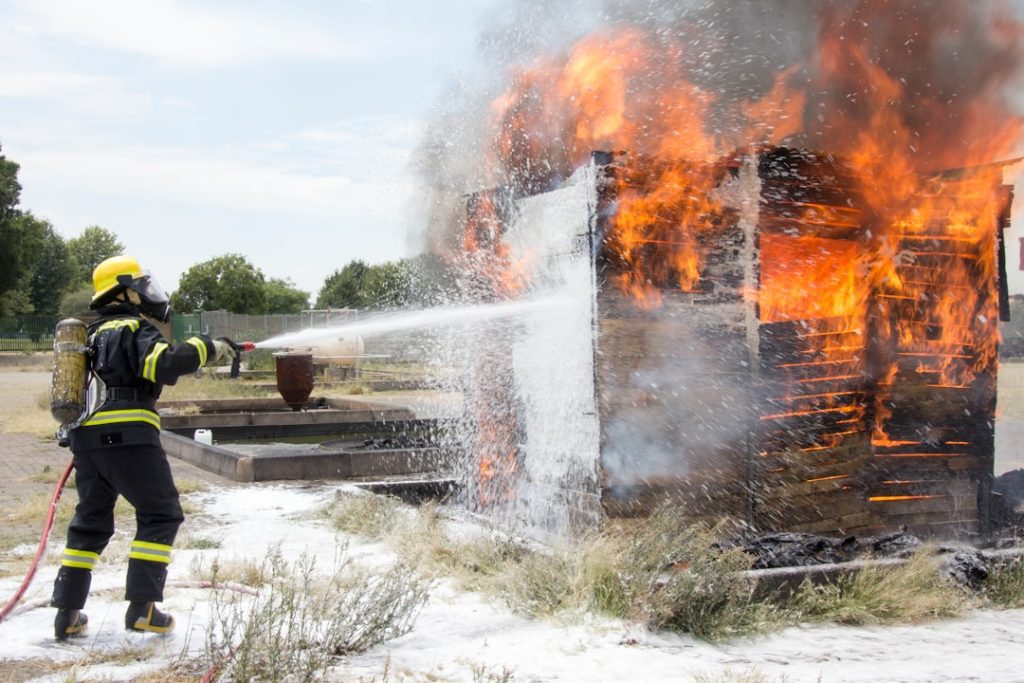
You walk into your home or business after a fire, and the first thing that hits you isn’t just the sight of the charred walls—it’s the smell. That heavy, cloying scent of smoke and burnt plastic seems to have soaked into every single pore of the building. Then comes the “recovery” phase. Usually, this is where a contractor walks in, looks at your beautiful hardwood beams or mahogany cabinetry, and tells you it all has to go. “It’s too far gone,” they say. “The only way to get rid of the smell and the soot is to rip it out and start over.”
For a long time, that was the only real option. If a surface was covered in soot or penetrated by smoke, the standard response was the sledgehammer. Demolition was the default because we didn’t have a way to clean deeply without damaging the material underneath. But here is the thing: demolition is loud, messy, expensive, and it destroys the original character of a building. It’s an aggressive solution to a contamination problem.
There is a better way. It’s called dry ice blasting.
Instead of tearing down your walls and replacing your structural supports, dry ice blasting allows us to lift the soot, char, and smoke residue off the surface without harming the actual material. It’s a scientific approach to restoration that prioritizes preservation over destruction. In a state like Florida, where we deal with everything from electrical fires to hurricane-related mishaps, knowing how to save a structure instead of scrapping it is a game-changer.
Understanding the Anatomy of Fire Damage
Before we dive into why dry ice blasting wins, we need to talk about what a fire actually does to a building. Most people think of fire damage as just the parts that burned. But the “burn” is actually the smallest part of the problem. The real enemy is the smoke and the soot.
The Science of Soot
Soot isn’t just “black dust.” Depending on what burned, soot can take several different forms, and each one reacts differently to cleaning agents:
- Dry Soot: This is the classic black powder often caused by fast-burning fires. It’s oily and smears easily. If you try to wipe this with a wet rag, you’re essentially rubbing a charcoal paste deeper into the pores of your walls.
- Wet Soot: This happens when plastics, rubbers, or synthetic foams burn. It’s sticky and clings to surfaces like glue. It’s incredibly hard to remove with traditional scrubbing.
- Protein Soot: This comes from animal-based products or certain types of organic fire. It’s often a yellowish-brown color and can be chemically aggressive, eating into finishes.
The Invisible Enemy: Smoke and Odors
Smoke is a gas containing millions of tiny particles. These particles are so small that they migrate into everything—inside your HVAC ducts, behind your drywall, and deep into the grain of your wooden beams. This is why a house can look “clean” after a surface wipe-down but still smell like a campfire for three years.
When most contractors suggest demolition, they are doing it because they can’t get to these microscopic particles. They figure the only way to stop the smell is to remove the material entirely. This is where the limitations of traditional cleaning become a liability for the property owner.
What Exactly is Dry Ice Blasting?
If you’ve never heard of it, dry ice blasting sounds like something out of a science fiction movie. In reality, it’s a process of using compressed air to propel tiny pellets of solid carbon dioxide (dry ice) at high speeds against a surface.
How the Process Works
The magic of dry ice blasting isn’t just the impact; it’s the physics of sublimation.
- Impact: The dry ice pellet hits the soot or char at a very high velocity. This creates a mechanical shock that knocks the contaminant loose.
- Thermal Shock: Dry ice is extremely cold (about -109°F). When it hits the surface, it creates a rapid temperature difference. This causes the soot or smoke residue to contract and “snap” away from the substrate.
- Sublimation: Here is the best part. As soon as the pellet hits the surface, it doesn’t melt into a liquid. It turns directly from a solid into a gas.
Because the pellets vanish into thin air, there is no secondary waste. You aren’t left with piles of sand, water, or chemical sludge. The only things left on the floor are the contaminants that were blasted off the walls.
Why This Matters for Fire Restoration
Traditional cleaning methods often add moisture to a building. If you use steam cleaners or chemicals on fire-damaged wood, you risk pushing the soot deeper into the grain or, worse, creating a perfect environment for mold to grow (which, in the Florida humidity, happens faster than you can blink). Dry ice blasting is a “dry” process. It cleans the surface without introducing any liquids that could lead to secondary damage.
Dry Ice Blasting vs. Demolition: A Side-by-Side Comparison
To really understand why we push for dry ice blasting at Cat 3 Recovery, you have to look at the actual trade-offs. Demolition is often framed as the “sure thing,” but when you look at the numbers and the long-term results, it’s rarely the smartest move.
| Feature | Traditional Demolition | Dry Ice Blasting |
| :— | :— | :— |
| Material Preservation | Destroys the original structure | Preserves historic/original materials |
| Timeline | Tear down $\rightarrow$ Order materials $\rightarrow$ Rebuild | Clean $\rightarrow$ Refinish |
| Waste Generation | Massive amounts of debris to landfill | Only the removed soot/char |
| Secondary Damage | High risk of structural instability | Non-abrasive and safe |
| Cost | High (Demo costs + Full Reconstruction) | Moderate (Specialized cleaning) |
| Odor Removal | Removes the source, but misses gaps | Deep cleans crevices to neutralize odor |
| Moisture Risk | Low (unless using wet demo) | Zero (completely dry process) |
The “Replacement” Trap
Many homeowners fall into the trap of thinking, “I’ll just get new cabinets/floors, it’s a fresh start.” While that sounds nice, the reality of modern construction is that replacing custom millwork or structural beams is incredibly expensive. You aren’t just paying for wood; you’re paying for labor, permits, and the time it takes for materials to arrive.
Dry ice blasting allows you to keep the “bones” of your home. If you have 100-year-old beams or custom cabinetry that would be impossible to replicate today, demolition is a tragedy. Cleaning is a strategy.
Why “Just Scrubbing” Isn’t Enough
You might be wondering, “Why can’t I just hire a crew to scrub the walls with TSP or bleach?”
We see this all the time. A property owner tries to save money by using manual cleaning. The result? The soot gets smeared.
The Porosity Problem
Building materials aren’t solid blocks; they are porous. Wood has grain. Concrete has capillaries. Drywall is essentially a sponge. When you use a wet cloth or a chemical sponge, you are applying pressure. That pressure pushes the microscopic soot particles deeper into the pores of the material.
Once the soot is pushed in, it’s nearly impossible to get out. This is why some homes “smell again” a few months after a basic cleaning. The odors were just pushed deeper into the substrate, and as the seasons change and the building “breathes,” those smells waft back into the living space.
The Chemical Risk
Bleach is a common go-to for cleaning, but it’s actually a terrible choice for fire damage. Bleach doesn’t neutralize smoke odors; it just masks them temporarily. Furthermore, bleach can damage the fibers of the wood and leave behind a residue that can interfere with new paint or stains.
Dry ice blasting doesn’t use chemicals. It uses physics. By lifting the soot off the surface rather than scrubbing it into the surface, you ensure that the contamination is actually gone, not just hidden.
When to Choose Dry Ice Blasting (and When Demolition is Necessary)
Now, let’s be honest: we can’t save everything. As experts in building science, we know when a material is truly compromised.
Ideal Candidates for Dry Ice Blasting
- Structural Beams and Joists: If the wood is charred on the surface but structurally sound, dry ice blasting is the gold standard. It removes the char and the soot, leaving the beam ready for a fresh seal.
- Custom Cabinetry and Millwork: When you have high-end woodwork that would cost a fortune to replace, blasting saves the day.
- Industrial Machinery: In commercial fires, expensive equipment is often covered in soot. Dry ice blasting can clean these machines without needing to disassemble every single part.
- HVAC Systems and Ducts: Removing soot from ventilation systems is critical for indoor air quality. Blasting is far more effective than vacuuming alone.
- Concrete and Brick: These are highly porous materials. Blasting lifts the soot out of the “pores” of the concrete.
When You Actually Need Demolition
There are times when the “science” says the material has to go. You should opt for demolition if:
- Structural Integrity is Lost: If the fire has burned through the core of a load-bearing beam (not just the surface), it’s a safety hazard.
- Toxic Off-gassing: If a large amount of hazardous chemicals or certain plastics burned and the residue has chemically bonded with the material in a way that cannot be lifted, removal is safer.
- Severe Water Damage from Firefighting: Sometimes it’s not the fire that kills the house, but the 10,000 gallons of water the fire department pumped into it. If the drywall has collapsed or the subfloor is rotted and warped, blasting won’t fix that.
The Step-by-Step Process of a Professional Recovery
If you’re dealing with fire damage, you shouldn’t just call a “cleaning company.” You need a team that understands psychrometrics and contamination control. Here is how a professional recovery—like the one we provide at Cat 3 Recovery—actually looks.
Step 1: Assessment and Moisture Mapping
Before we touch a single pellet of dry ice, we have to understand the environment. We use thermal imaging and moisture meters to see where water from the fire hoses has settled. You cannot blast a surface that is saturated with water; you have to dry the structure first. This is where “structural drying science” comes in.
Step 2: Containment and Air Filtration
Dry ice blasting is efficient, but it does knock a lot of soot into the air. To prevent this soot from settling in “clean” areas of the house, we set up negative air pressure environments. We use HEPA air scrubbers to constantly filter the air, ensuring that we aren’t just moving the contamination from the wall to your bedroom.
Step 3: The Blasting Phase
Our technicians use specialized equipment to blast the affected areas. We start with the highest points (ceilings and beams) and work our way down. We adjust the pressure based on the material—harder for concrete, gentler for aged wood.
Step 4: Vacuuming and Debris Removal
Since the dry ice sublimates, the only thing left is the soot. We use industrial HEPA vacuums to remove every trace of the fallen residue.
Step 5: Molecular Deodorization
Even after the soot is gone, some odor molecules might remain. We don’t use scented sprays. We use hydroxyl generators or thermal fogging to neutralize the odors at a molecular level. This ensures the “burnt” smell is gone for good.
Step 6: Post-Cleaning Verification
We verify the results. This might involve ATP testing or air quality sampling to ensure the space is safe for habitation.
The Economic Argument: Saving Money in the Long Run
Many people are hesitant about dry ice blasting because the upfront cost of the specialized equipment can be higher than a guy with a bucket of soap and a sponge. But when you look at the total project cost, the savings are massive.
Reducing Replacement Costs
Let’s say you have $20,000 worth of custom kitchen cabinetry that survived the fire but is covered in soot.
- Scenario A (Demolition): Spend $2,000 on demo/disposal + $20,000 on new cabinets + $3,000 on installation. Total: $25,000.
- Scenario B (Dry Ice Blasting): Spend $5,000 on professional blasting and deodorization + $1,000 on a fresh coat of sealant. Total: $6,000.
The math is simple. By preserving the existing materials, you save thousands of dollars and weeks of time.
Insurance Navigation
Insurance companies generally want the most cost-effective way to return a property to its “pre-loss condition.” When we provide the documentation showing that a structure can be safely restored through dry ice blasting rather than replaced, it often streamlines the claims process. It shows the adjuster that we are using a scientific, targeted approach rather than just “ripping and replacing” for the sake of it.
Common Mistakes Homeowners Make After a Fire
When the adrenaline wears off after a fire, it’s tempting to try and “get a head start” on the cleanup. Honestly? Please don’t.
Mistake 1: The “Wipe Down”
As mentioned, wiping soot with a wet rag is the fastest way to permanently stain your home. Once that soot is pushed into the pores of the wood or drywall, dry ice blasting may actually be less effective because the contaminant is no longer on the surface.
Mistake 2: Using Home-Grade Air Purifiers
Small HEPA filters are great for dust, but they aren’t designed to handle the volume of particulate matter present after a fire. Without professional-grade negative air machines, you’re just circulating soot.
Mistake 3: Painting Over the Smell
Some “handymen” will suggest sealing the soot with a primer like KILZ and then painting over it. This is a disaster waiting to happen. The soot is still there. The moisture trapped under the paint can lead to mold growth, and eventually, those odors will find a way through the paint film.
The Environmental Impact of Restoration
In an era where we are all trying to be more conscious of our footprint, demolition is an environmental nightmare. A single house fire can result in tons of debris sent to a landfill—much of which (like treated lumber and drywall) doesn’t decompose easily.
Dry ice blasting is a “green” technology for a few reasons:
- Zero Chemical Waste: No harsh solvents or acids are pumped into the ground or washed down the drain.
- Waste Reduction: By saving the beams, the floors, and the cabinets, you are keeping tons of material out of the landfill.
- Low Residue: Because CO2 is a natural part of the atmosphere, the “cleaning agent” simply disappears.
FAQ: Everything You Need to Know About Dry Ice Blasting
Q: Does dry ice blasting damage the wood?
A: No. Unlike sandblasting, which is abrasive and “eats” into the material, dry ice is non-abrasive. It knocks the contaminant off the surface without removing the actual substrate.
Q: How long does the process take?
A: It depends on the size of the project, but it is significantly faster than the “demo and rebuild” cycle. You aren’t waiting for new materials to be shipped; you’re simply cleaning what is already there.
Q: Can it get into hard-to-reach places?
A: Yes. The pellets are propelled by high-pressure air, meaning they can reach into crevices, joints, and gaps that a scrub brush simply cannot fit into. Furnishings and personal property are handled on a separate track through contents pack-out and restoration, away from the active work area.
Q: Will it get rid of the smell entirely?
A: In the vast majority of cases, yes. Because it removes the physical source of the odor (the soot and char) from the pores of the material, the smell goes with it. For the remaining airborne molecules, we follow up with molecular deodorization.
Q: Is it safe for my family or pets?
A: Absolutely. There are no toxic chemicals involved. The only safety concern is the CO2 gas produced during sublimation, which is why we use professional ventilation and air scrubbers during the process.
Dealing with Florida’s Unique Challenges
Operating in Southwest Florida, we know that fire damage rarely happens in a vacuum. Here, we deal with a “compounding effect.”
The Humidity Factor
In Fort Myers or Naples, the humidity is always high. When a fire happens and the fire department responds, the amount of water introduced into the building is staggering. This creates a high-risk environment for mold.
If you choose traditional demolition, you’re often tearing through wet materials, which can release mold spores into the air. If you choose a scientific restoration approach, we dry the building using industrial dehumidifiers and psychrometric calculations first, then blast the soot away. This prevents the transition from a fire-damage project to a mold-remediation project.
Salt-Air Corrosion
For properties near the coast, the salt in the air already stresses the building materials. Fire damage adds another layer of degradation. Dry ice blasting is particularly effective here because it removes the charred residue without adding more corrosive chemicals or excessive moisture to an already stressed structure.
Actionable Steps if You’ve Experienced Fire Damage
If you’re reading this because you’re currently staring at a smoke-damaged room, here is exactly what you should do in the next 48 hours:
- Secure the Perimeter: Ensure the fire marshal has cleared the building for entry. Do not go in if the structure is unstable.
- Stop the “Quick Fixes”: Tell your family and friends not to scrub the walls. No bleach, no soap, no wet rags. Leave the soot where it is.
- Control the Environment: If it’s safe, get dehumidifiers running. In Florida, you need to stop the “secondary damage” (mold) immediately.
- Document Everything: Take photos of every room, every charred beam, and every soot-covered surface. Your insurance company will need this, and so will your restoration team.
- Call a Specialist: Don’t just call a general contractor. Call a restoration company that specializes in building science and dry ice blasting. You need someone who knows how to save the structure, not just someone who knows how to tear it down.
Why Cat 3 Recovery is the Right Choice
At Cat 3 Recovery, we don’t view restoration as “cleanup.” We view it as an intersection of emergency response, environmental health, and structural science.
We know that for a homeowner in Cape Coral or a business owner in Fort Myers, your building is more than just an asset—it’s your life or your livelihood. That’s why we’ve invested in advanced technology like dry ice blasting. We aren’t interested in the easy path of demolition. We’re interested in the right path of preservation.
Our approach is based on IICRC standards. We use thermal imaging to find hidden moisture, HEPA filtration to protect your air, and dry ice technology to save your structural integrity. We don’t just move the soot around; we remove it from the environment entirely.
Whether you’re dealing with a small kitchen fire or a massive commercial loss, the goal is the same: get you back into your space as quickly as possible, with the highest possible air quality, and the lowest possible cost of reconstruction.
Final Thoughts on Preservation
The instinct to “rip it out and start over” is a relic of an older era of restoration. We now have the tools to be precise. We can target a specific layer of contamination without destroying the heart of a building.
Dry ice blasting isn’t just a “cool” piece of technology; it’s a way to save the character of your home and the budget of your insurance claim. It’s the difference between losing a piece of history and restoring it to its former glory.
If you’re facing fire damage in Southwest Florida, don’t let a contractor convince you that the sledgehammer is the only answer. There is a scientific, cleaner, and more efficient way to recover.
Ready to save your structure? Contact Cat 3 Recovery today. Let us show you how we can use dry ice blasting and structural drying science to bring your property back to life without the unnecessary demolition.
